In this guide
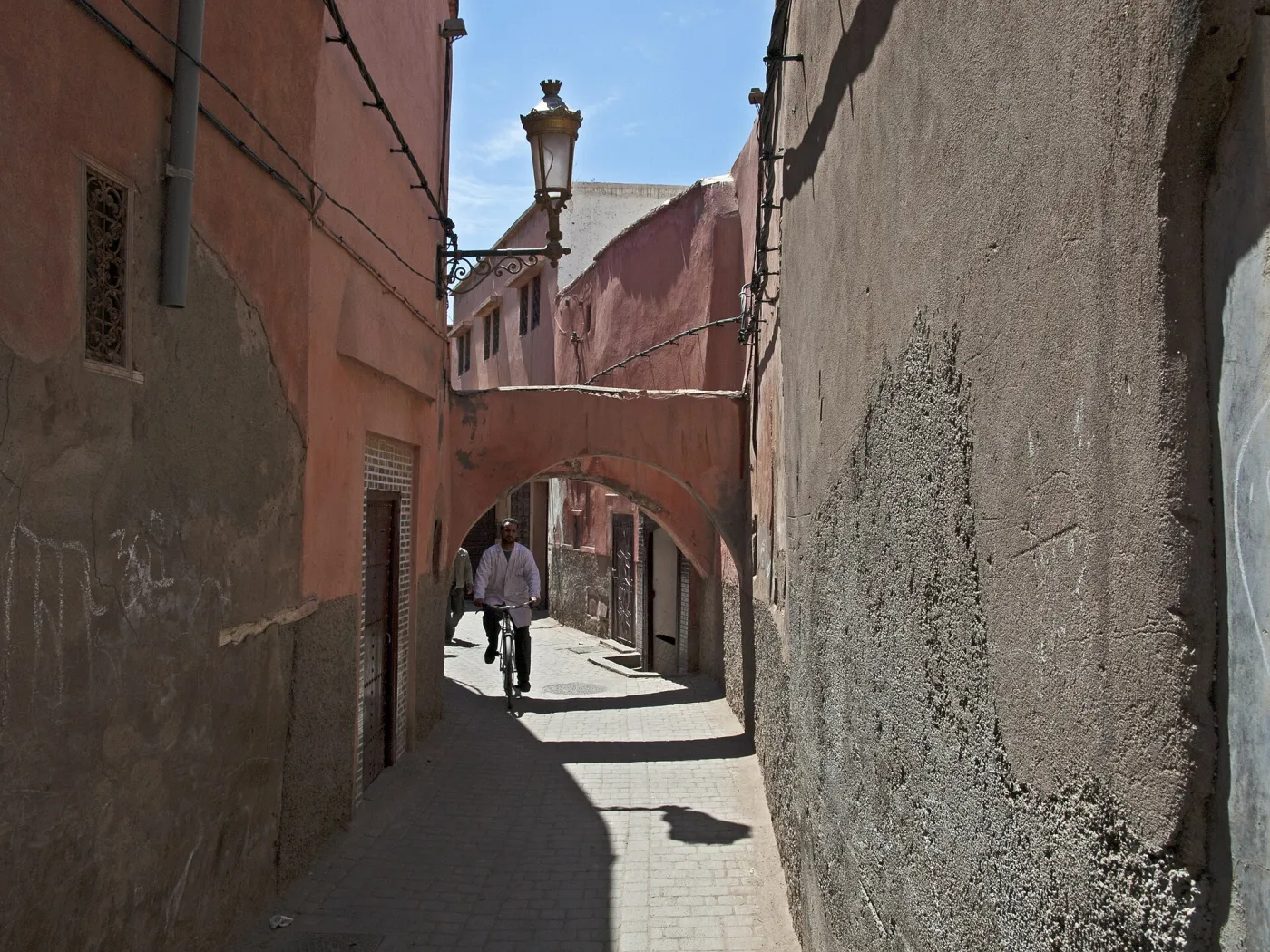
The Marrakech medina is roughly 6 km² of old town divided into distinct neighbourhoods (derbs grouped into quarters). The ones most visitors use are Mouassine and Bab Doukkala in the north-west, the souks and Ben Youssef north of Jemaa el-Fna, Riad Zitoun and the Mellah to the south-east, and the Kasbah in the far south. Each has its own pace, sights and noise level, so knowing the Marrakech medina neighbourhoods makes the old town far easier to navigate.
How the medina is laid out
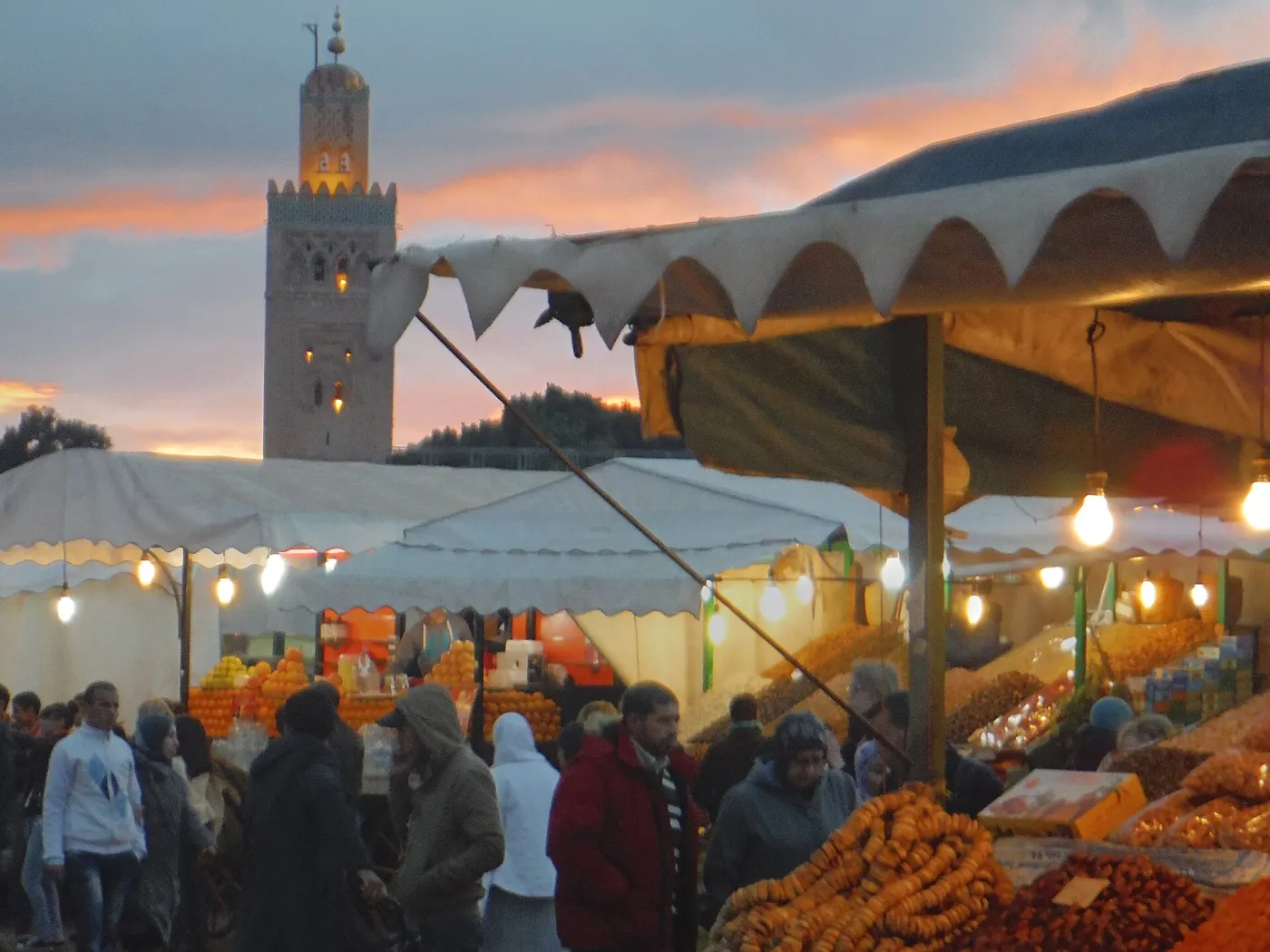
We grew up walking these streets, and the first thing we tell guests is that the medina is not one big maze. It is a set of neighbourhoods stitched together by a few main arteries. Jemaa el-Fna is the hinge. North of it sit the souks, stretching up towards the Ben Youssef Madrasa. West is Mouassine, then Bab Doukkala. South-east run Riad Zitoun el Kdim and Riad Zitoun el Jdid down to the Bahia Palace and the Mellah. Due south, past the Koutoubia, is the Kasbah with the Saadian Tombs. The whole thing is enclosed by around 19 km of pink rampart walls with gates (babs) that double as useful landmarks.
From Jemaa el-Fna you can reach almost any quarter in 10 to 20 minutes on foot. Distances are short; what slows you down is the lack of straight lines, scooters in narrow lanes and the temptation to stop at every shop.
The neighbourhoods at a glance
| Neighbourhood | Character | Main sights | Walk from Jemaa el-Fna |
|---|---|---|---|
| Souks and Ben Youssef | Busy, commercial, craft workshops | Ben Youssef Madrasa, Musée de Marrakech, Almoravid Koubba | 10–15 min |
| Mouassine | Refined, gallery shops, many riads | Le Jardin Secret, Mouassine fountain, Dar el Bacha | 8–12 min |
| Bab Doukkala | Local, residential, good produce market | Bab Doukkala mosque, Dar el Bacha (edge) | 15–20 min |
| Riad Zitoun | Straight(ish) lanes, easy to navigate | Bahia Palace, Dar Si Said, Place des Ferblantiers | 5–15 min |
| Mellah | Former Jewish quarter, spice market, workaday | Lazama Synagogue, Jewish cemetery, spice square | 15 min |
| Kasbah | Calmer, historic royal quarter | Saadian Tombs, Kasbah Mosque, near El Badi | 15–20 min |
| Bab Debbagh / Sidi Ben Slimane | Artisans, tanneries, very local | Tanneries, Zaouia of Sidi Bel Abbes | 20–25 min |
Souks and Ben Youssef
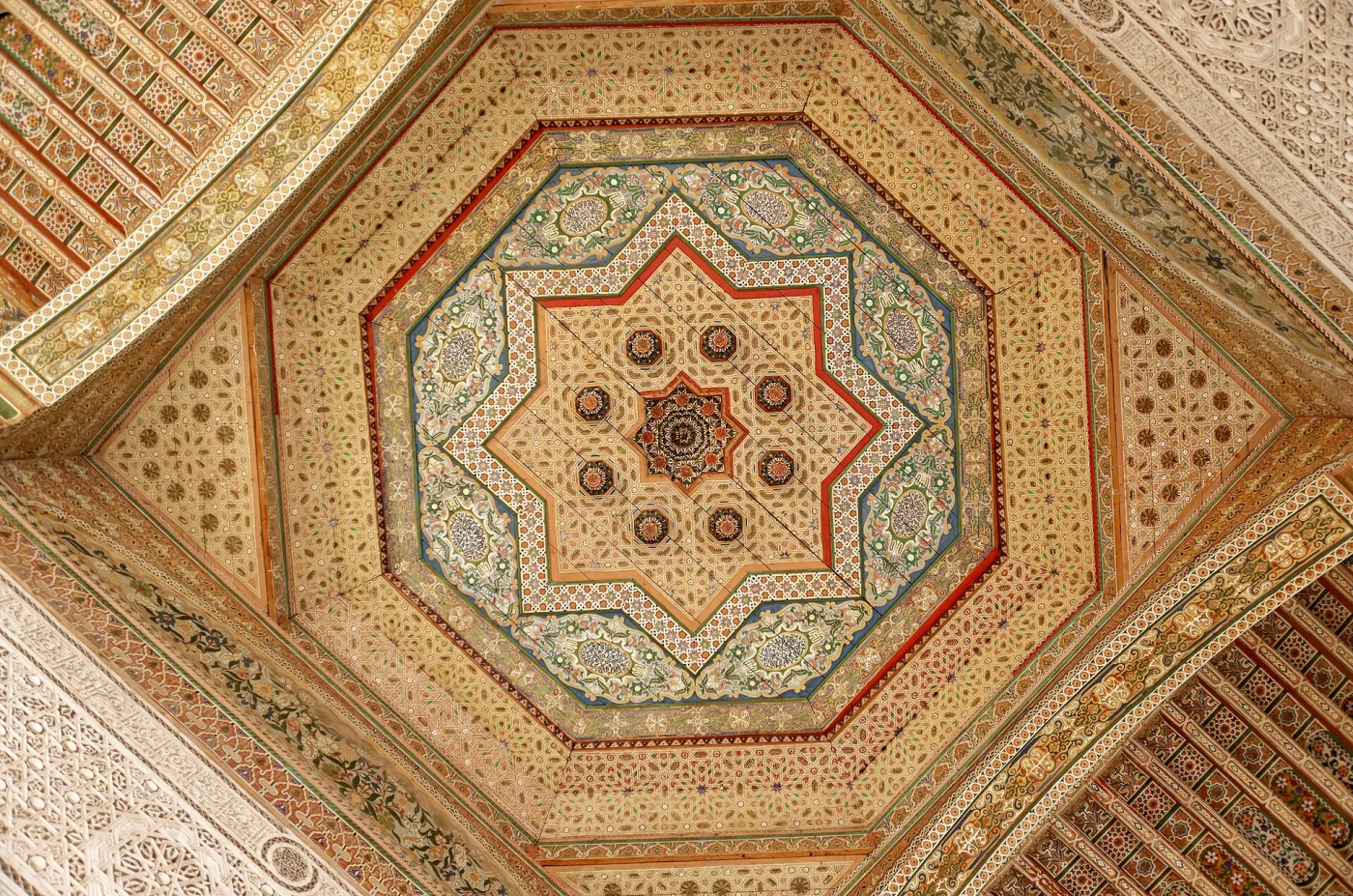
This is the commercial heart. The souks are organised loosely by trade: Souk Semmarine (the main covered street), then Souk el Attarine for spices and lamps, the dyers' souk with skeins of wool drying overhead, and the metalworkers further up. The Ben Youssef Madrasa, a 16th-century Quranic school with some of the finest carved stucco and cedar in Morocco, anchors the northern end. Mornings between 9:00 and 11:00 are the calmest time; by late afternoon the lanes are shoulder to shoulder.
Mouassine and Bab Doukkala
Mouassine is where we send people who want something a bit quieter but still central. It has design shops, small cafés on rooftops, and Le Jardin Secret, a restored 19th-century riad garden (around 100 MAD entry, with an extra fee for the tower). Walking west you reach Bab Doukkala, which feels much more like a normal Marrakchi neighbourhood: butchers, bakeries with communal wood ovens, and fruit stalls. Dar el Bacha, the former residence of the pasha, sits between the two and houses a museum and a well-known coffee house where the queue can reach 30–45 minutes.
Riad Zitoun el Kdim and el Jdid
If you are nervous about getting lost, this is your friend. Both Riad Zitoun streets run roughly north–south from Jemaa el-Fna towards the palace district, and they are wider than most. Riad Zitoun el Jdid leads to the Bahia Palace and Dar Si Said (the carpet and weaving museum). Place des Ferblantiers, the tinsmiths' square, marks the edge of the Mellah. We cover this area in more detail in our guide to visiting the Bahia Palace.
The Mellah
Founded in the 16th century next to the royal palace, the Mellah was the Jewish quarter. Very few Jewish families remain, but the Lazama Synagogue is open to visitors and the Miâara Jewish cemetery, with its whitewashed tombs, is one of the most moving places in the city. The covered spice market and the jewellery street off Place des Ferblantiers are genuinely local and often cheaper than the main souks. The layout is tight and residential, so dress modestly and ask before photographing people.
The Kasbah
The Kasbah was the Almohad and later Saadian royal quarter. Enter through Bab Agnaou, one of the most beautiful carved stone gates in Morocco, and you reach the Kasbah Mosque and the Saadian Tombs next door. El Badi Palace is a few minutes away on the edge of the Mellah. The Kasbah has more open squares, fewer hustlers and plenty of small riads, which makes it a good base for families. Our Kasbah quarter guide to the Saadian Tombs and El Badi goes deeper on these two sites.
Bab Debbagh and the northern quarters
North-east of Ben Youssef, the lanes lead to Bab Debbagh and the tanneries. Be aware this is the area with the most persistent "the tanneries are this way" approaches from young men who then ask for money. If you want to see them, go with someone you trust and agree on any fee first. Nearby, the Zaouia of Sidi Bel Abbes honours one of the city's seven patron saints; non-Muslims cannot enter the shrine itself, but the surrounding streets are worth a look.
Practical tips for navigating the neighbourhoods
- Use gates and mosques as landmarks. Bab Agnaou, Bab Doukkala, the Koutoubia minaret and the Ben Youssef area are easy to ask for.
- Download an offline map. Google Maps works reasonably well in the medina, but the blue dot drifts in narrow lanes; Maps.me often has more alleys marked.
- Ignore "road closed" warnings from strangers. It is an old trick to lead you to a shop or ask for a tip.
- Carry small change. Mint tea is 10–20 MAD in local cafés, 25–40 MAD on tourist rooftops.
- Time your walk. From June to September, midday temperatures often exceed 38°C; walk early and late.
Quick FAQ
Which Marrakech medina neighbourhood is best for first-timers?
Mouassine or Riad Zitoun. Both are central, within 10 minutes of Jemaa el-Fna, and easier to navigate than the northern souks.
Is the medina safe to walk at night?
The main arteries and Jemaa el-Fna are busy until late and generally safe. Quiet residential derbs are best avoided alone after about 23:00, mostly because it is easy to get lost rather than for danger.
How long do you need to see the main neighbourhoods?
A focused half-day covers the souks, Mouassine, Riad Zitoun and the Kasbah. Adding the Mellah and a couple of monuments makes it a full day.
See the medina with us
We love showing people how these quarters connect, and a few hours with a licensed local guide saves a lot of wrong turns. Our private guided tour of the Marrakech medina starts from €35 per person, lasts about 4 hours and includes free pickup from your riad or hotel. We adapt the route to your interests, whether that is architecture, crafts or food. You can browse all our Marrakech city tours, then message us on WhatsApp to book; there is no online prepayment.
Comments