In this guide
The best Marrakech street food comes out after dark: harira soup, snail soup, grilled brochettes, merguez, fried fish and slow-cooked tanjia. Jemaa el-Fna's numbered stalls fill up from about 18:00 to past midnight, while locals also eat around Mechoui Alley, the Mellah and Bab Doukkala. Expect to pay roughly 15–25 MAD for a bowl of soup and 60–120 MAD for a full grilled plate.
Why Marrakech eats late
We are a city that lives outdoors once the heat drops. Between April and October, streets feel sleepy at 15:00 and packed at 21:00. Families come out after the sunset prayer, snack while walking, and eat properly around 21:00–22:00. If you only eat in riads and rooftop restaurants, you miss the real food scene, which is cheap, fast and cooked in front of you.
What to eat: the essential list
| Dish | What it is | Fair price (approx.) |
|---|---|---|
| Harira | Tomato, lentil and chickpea soup, often served with dates and chebakia | 10–20 MAD |
| Babbouche (snail soup) | Snails in a peppery broth with liquorice, thyme and aniseed | 10–25 MAD a bowl |
| Brochettes | Lamb, beef, chicken or kefta skewers grilled over charcoal | 30–60 MAD a plate |
| Merguez | Spiced lamb sausage, usually in bread with harissa | 20–40 MAD |
| Tanjia | Beef or lamb slow-cooked for hours in a clay urn in the ashes of a hammam furnace | 70–120 MAD for a portion |
| Mechoui | Whole lamb roasted in an underground oven, sold by weight | 120–180 MAD per 250 g |
| Fried fish | Sardines, calamari and whiting with lemon and cumin salt | 50–100 MAD |
| Msemen and harcha | Flaky pancakes and semolina breads, often with honey or cheese | 5–15 MAD |
| Fresh orange juice | Pressed at the square's juice carts | 5–15 MAD |
Jemaa el-Fna after sunset
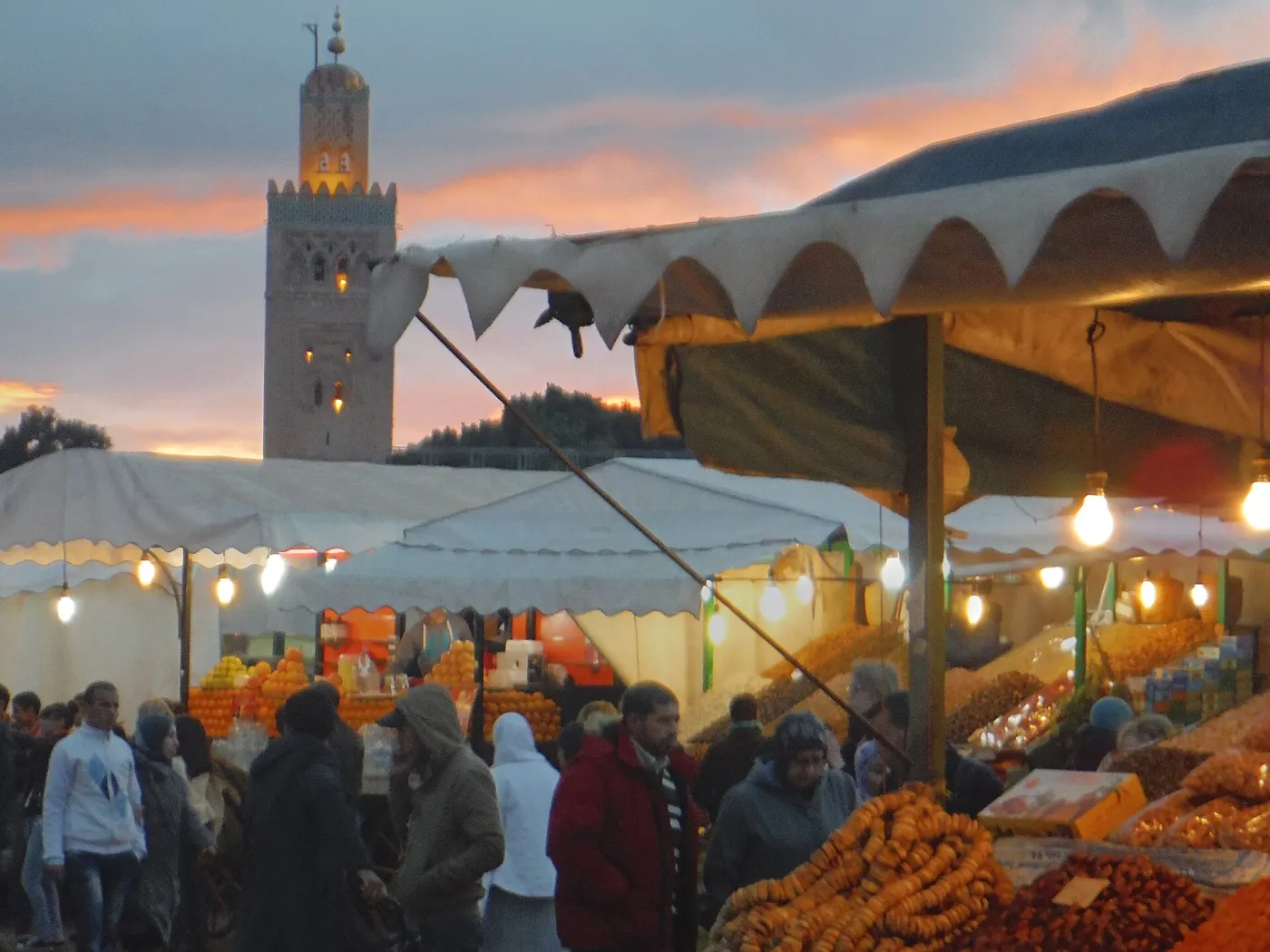
From about 17:00, carts roll into the square and within an hour it becomes an open-air kitchen with around 100 numbered stalls. Each stall has a speciality: some grill meat, some fry fish, some only serve sheep's head or snails. You sit on benches under the lights and food arrives quickly. The atmosphere, with the smoke, drums and storytellers, is worth experiencing at least once.
How to choose a good stall
- Look for locals. Moroccan families eating there is the best sign.
- Watch the turnover. Busy stalls cook constantly; food does not sit around.
- Ask prices before sitting. Once you sit, you are expected to order.
- Refuse what you did not order. Bread, olives and salads may be added to the bill, typically 5–15 MAD each.
- Ignore aggressive touts. The quality of a stall is not related to how hard someone pulls you in.
Beyond the square: where locals eat
Mechoui Alley (Souk Ablueh)
On the north-east corner of Jemaa el-Fna, a short lane of small shops sells mechoui and tanjia. The lamb comes out of the underground ovens from late morning, so this is really a lunchtime spot, winding down around 14:00–15:00. You order by weight, it arrives on paper with cumin and salt, and you eat with bread and your hands.
The Mellah and Riad Zitoun
Around the Mellah and along Riad Zitoun el Jdid you find simple grills, sandwich stands and bakeries at local prices. It is also where you can see the ferran (communal oven) and fernatchi (hammam furnace) where tanjia urns are left to cook. If you want to understand this part of town better, read our local's map of the medina neighbourhoods.
Bab Doukkala and Gueliz
Bab Doukkala has fried fish shops and rotisserie chicken counters that stay busy until late. In Gueliz, the market area near the central market has snack bars serving bocadillos and grilled meat to office workers and students.
Is street food safe?
In our experience, yes, if you use common sense. Stick to food cooked hot in front of you, peeled fruit and bottled water. Be cautious with raw salads if your stomach is sensitive during the first days. Many stalls serve tap water in shared cups; ask for a sealed bottle instead. Hand sanitiser and a pack of tissues are useful, as paper napkins are small. Vegetarians do well with harira (sometimes made with meat stock, so ask), bean soup (bissara, great in winter), grilled vegetables, msemen and fresh juice.
Sweet things and drinks
Look for chebakia (sesame and honey pastries, everywhere during Ramadan), sfenj (Moroccan doughnuts, sold in the mornings), and the spiced galangal and ginger tea sold from copper urns in Jemaa el-Fna, usually 5–10 MAD a glass. Juice carts on the square are fine, but make sure the juice is pressed in front of you and not diluted.
A simple route for your first night
If you want to try the square on your own, start with a harira at one of the soup stalls around 19:00, share a mixed grill of brochettes and merguez at a busy stall, then walk to the snail stands on the eastern side for a small bowl. Finish with a galangal tea and a fresh orange juice. That is five tastes for roughly 100–150 MAD per person, without committing to one big sit-down meal.
Street food during Ramadan
During Ramadan, food stalls wake up just before sunset. The whole city breaks the fast together with harira, dates, boiled eggs and chebakia, and the evening becomes lively until the early hours. Many daytime cafés close, so plan around it.
Quick FAQ
What time do the Jemaa el-Fna food stalls open?
They set up from around 17:00 and are in full swing from 19:00 until roughly midnight or later on weekends.
How much should dinner at the stalls cost?
For two people, a generous meal with soup, a grilled plate and drinks is usually 150–250 MAD. Anything much higher usually means extras were added.
Do I need cash?
Yes. Stalls take cash only, so carry small notes and coins.
Eat Marrakech with us
The easiest way to try everything without guessing is to go with someone who knows which cook makes the best snail broth. Our evening street food tour in Marrakech runs for about 3.5 hours, from €45 per person, with free pickup from your riad or hotel, and we adapt stops to vegetarians and picky eaters. If you are planning a longer stay, our hour-by-hour plan for one day in Marrakech shows how to fit a food evening into your trip. Browse all our city tours in Marrakech and message us on WhatsApp to book, with nothing to prepay online.
Comments