In this guide
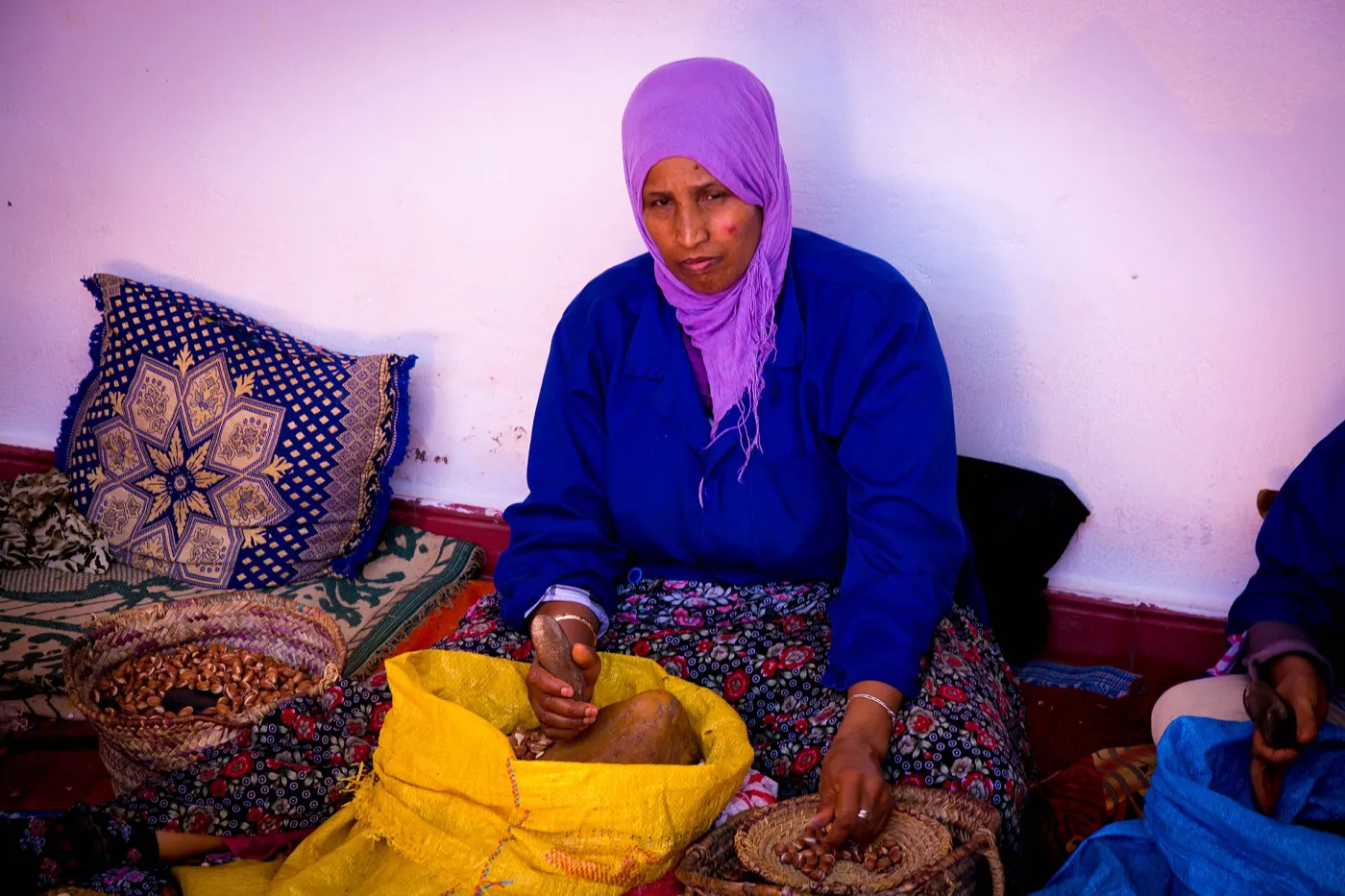
An argan oil cooperative in Morocco is a women-run association that cracks, roasts and presses argan kernels, and several operate along the Marrakech–Essaouira road. Many roadside "cooperatives" are genuine, some are shops using the name, and the goats in trees are often placed there for photos. Look for a registered cooperative name, women working the kernels by hand, and fair prices of roughly 120–180 MAD for 250 ml of culinary oil.
Why argan grows only here
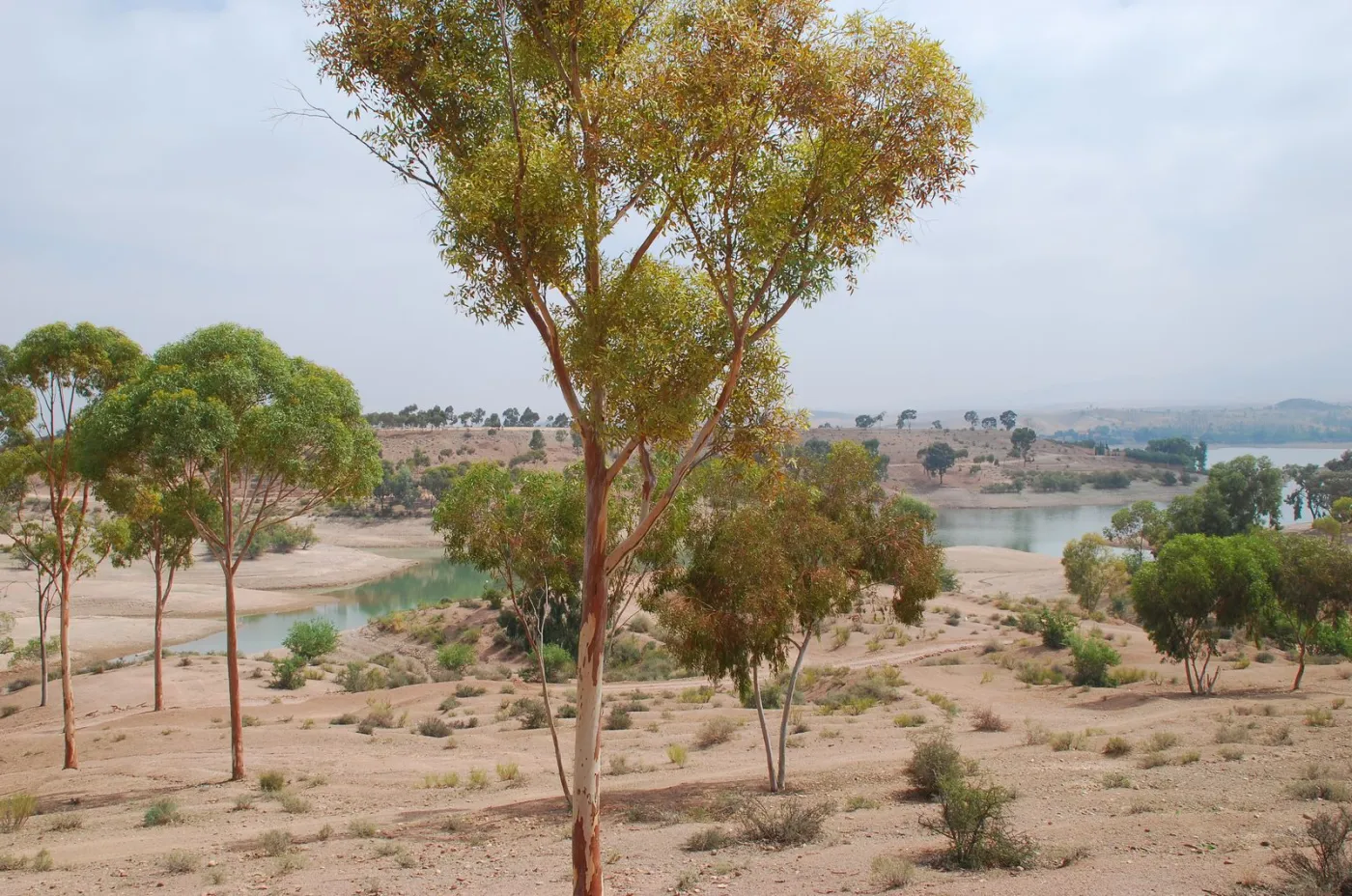
The argan tree (Argania spinosa) grows naturally only in south-west Morocco, in a triangle between Essaouira, Agadir and Taroudant. UNESCO made the area a Biosphere Reserve in 1998, and in 2014 the knowledge and practices around argan were added to its intangible heritage list. On the drive from Marrakech to Essaouira (about 190 km, 2 h 45 min to 3 h), the landscape changes noticeably after Chichaoua: the dry plains give way to low, twisted, thorny argan trees scattered across red soil. That is your cue that the cooperative stops are near.
How argan oil is actually made
It helps to know the process so you can tell a real workshop from a display counter.
- Harvest: the fruit falls from the tree between June and August and is collected and dried.
- Peeling: the dry pulp is removed, often fed to animals.
- Cracking: the nut is extremely hard. Women crack it between two stones to free one to three small kernels. This is the slow part; an experienced worker produces only a few kilos of kernels a day.
- Roasting (culinary only): kernels for food oil are lightly roasted, which gives the nutty smell. Cosmetic oil uses raw kernels.
- Pressing: traditionally by hand-grinding into a paste and kneading with water; most cooperatives now use mechanical cold presses for hygiene and yield.
Roughly 30–40 kg of fruit makes a single litre of oil, which explains the price.
Real cooperative or tourist shop?
Here is what we look for when choosing a stop on our Essaouira coastal day trip with argan stop:
- A registered name: genuine associations display "Coopérative" plus a name and usually a registration number and certifications (organic labels, the Argane PGI logo).
- People working: women cracking nuts and grinding in a real work area, not only a demo bench by the till. Cooperatives often pay members per kilo of kernels.
- No hard sell: you get an explanation, a tasting of amlou (almond, argan and honey spread) and bread, then the shop. Nobody should follow you around.
- Clear pricing: fixed prices on the shelf, labelled by volume and by culinary or cosmetic use.
A place with a large coach car park, a single woman demonstrating and a long corridor of creams at inflated prices is a shop, even if the sign says cooperative. It is not a scam exactly, but the money reaching local women is smaller.
The goats in the trees
Goats really do climb argan trees to reach the leaves and fruit, mostly in late spring and summer when the ground is bare. Along the Essaouira road, though, you will often see a tree full of perfectly still goats with a herder waiting for tips. Many of those animals are placed there and kept on the branches for hours. We prefer not to stop at these, and we ask our drivers to point out wild climbing goats if we see them on back roads instead. If you do stop, a tip of 10–20 MAD for a photo is usual.
Prices: what argan oil should cost in 2026
| Product | Approx. cooperative price | Notes |
|---|---|---|
| Culinary argan oil, 250 ml | 120–180 MAD | Roasted, golden-brown, nutty smell |
| Cosmetic argan oil, 100 ml | 100–180 MAD | Pale, almost no smell once exposed to air |
| Amlou, 250 g jar | 60–120 MAD | Almond, argan oil and honey spread |
| Argan soap or cream | 40–150 MAD | Check the ingredient list for argan percentage |
If a small bottle of cosmetic oil is offered at 30 MAD, it is almost certainly diluted. If a 100 ml bottle is priced at 400 MAD, you are paying for the showroom.
How to check quality yourself
Rub a drop into your skin: pure cosmetic oil absorbs within a minute or two and leaves no greasy film. Culinary oil should smell of toasted nuts, never rancid or fishy. Buy dark glass bottles with a production date, and store them out of the sun.
Other stops on the road to Essaouira
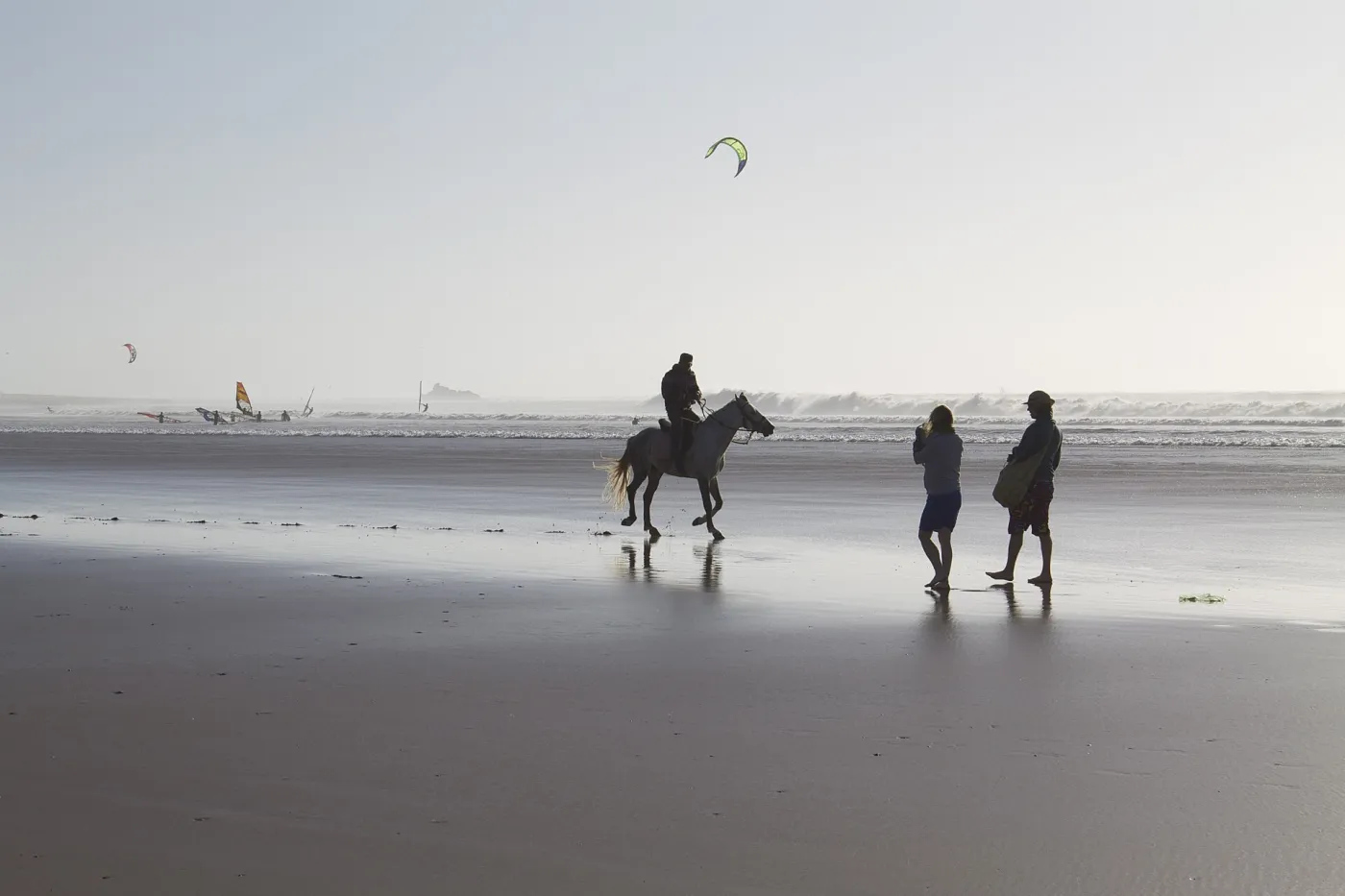
Most day trips stop once for coffee around Chichaoua or Sidi Mokhtar, once at an argan cooperative, and sometimes at a viewpoint over the argan forest before the coast. Essaouira itself gets you a walled medina, the ramparts of the Skala, a working fishing port and a long beach; our guide to Essaouira's beaches and kitesurfing spots covers the coast side. For a broader list of options, see our full range of day excursions from Marrakech. If you want another village-market experience closer to the city, the Asni Saturday souk is a different, very local side of rural trade.
Buying responsibly
- Buy directly from the cooperative shop rather than from roadside sellers with unlabelled bottles.
- Remember airline rules: liquids over 100 ml go in checked luggage.
- Your driver or guide should not pressure you. On our trips, buying nothing is completely fine.
Quick FAQ
Are argan oil cooperatives in Morocco really run by women?
Many are. Since the late 1990s, women's cooperatives have organised production and sales, giving members a regular income. Some businesses use the word loosely, so look for real work areas and registration details.
Is argan oil cheaper at a cooperative than in Marrakech?
Usually slightly, and you know more about its origin. Quality oil is never very cheap because of the labour involved.
Can I bring argan oil home by plane?
Yes. Bottles up to 100 ml can go in your cabin liquids bag; larger bottles belong in checked luggage, well wrapped.
Take the coast road with us
Our Essaouira day trip from Marrakech includes a stop at a working argan cooperative we trust, then free time in Essaouira. It runs from €35 per person, private or small-group, with free riad pickup and a licensed local driver. Message us on WhatsApp or through the website; you pay on the day, not online.
Comments