In this guide
- What "three valleys" actually means
- A realistic itinerary, hour by hour
- The Ourika Valley: the busiest valley
- Asni, Moulay Brahim and the road to Imlil
- Ouirgane or the Kik plateau: the quiet third valley
- Best time of year for a three valleys trip
- What to bring and what it costs on the day
- Three valleys or a single-valley day?
- Quick FAQ
- Plan your day with us
A three valleys Marrakech day trip usually links the Ourika Valley, the Asni area (Moulay Brahim gorge and the road towards Imlil) and either the Ouirgane valley or the Kik plateau, in one loop of roughly 9 hours and 180–220 km. In practice you see Amazigh villages, a Berber house tea stop, riverside walking and big High Atlas views, rather than three separate sightseeing sites.
What "three valleys" actually means
We get this question on WhatsApp almost every week, and it is a fair one: there is no official "Three Valleys" route. Local operators use the name for a loop that strings together several valleys of the High Atlas south of Marrakech. The combination changes from one company to the next, which is why two travellers who both did a three valleys Marrakech tour can describe completely different days.
The most common combinations we see are:
- Ourika + Asni + Ouirgane — the classic loop, with the river at Ourika, the Saturday market town of Asni and the greener, quieter Ouirgane valley.
- Ourika + Asni + Kik plateau — swaps Ouirgane for the farming plateau near Amizmiz, at around 1,800 m, with views down to Lalla Takerkoust lake.
- Ourika + Oukaïmeden + Asni — adds the high road to the ski station at about 2,600 m; best in spring and autumn, sometimes closed by snow in winter.
Before you book with anyone (us included), ask which three valleys are on the plan and roughly how long you spend at each. A good answer names places and times, not just "Atlas mountains".
A realistic itinerary, hour by hour
Here is how our own Three Valleys and Atlas Mountains day trip usually runs. Timings shift with traffic and the season, but this gives you a truthful picture.
| Time | Stop | What you do |
|---|---|---|
| 08:30 | Riad or hotel pickup | Free pickup anywhere in Marrakech; drive south on the Tahanaout road |
| 09:30 | Tahanaout / Ourika road | Red-earth villages, pottery stalls, first views of the snow line (Dec–Apr) |
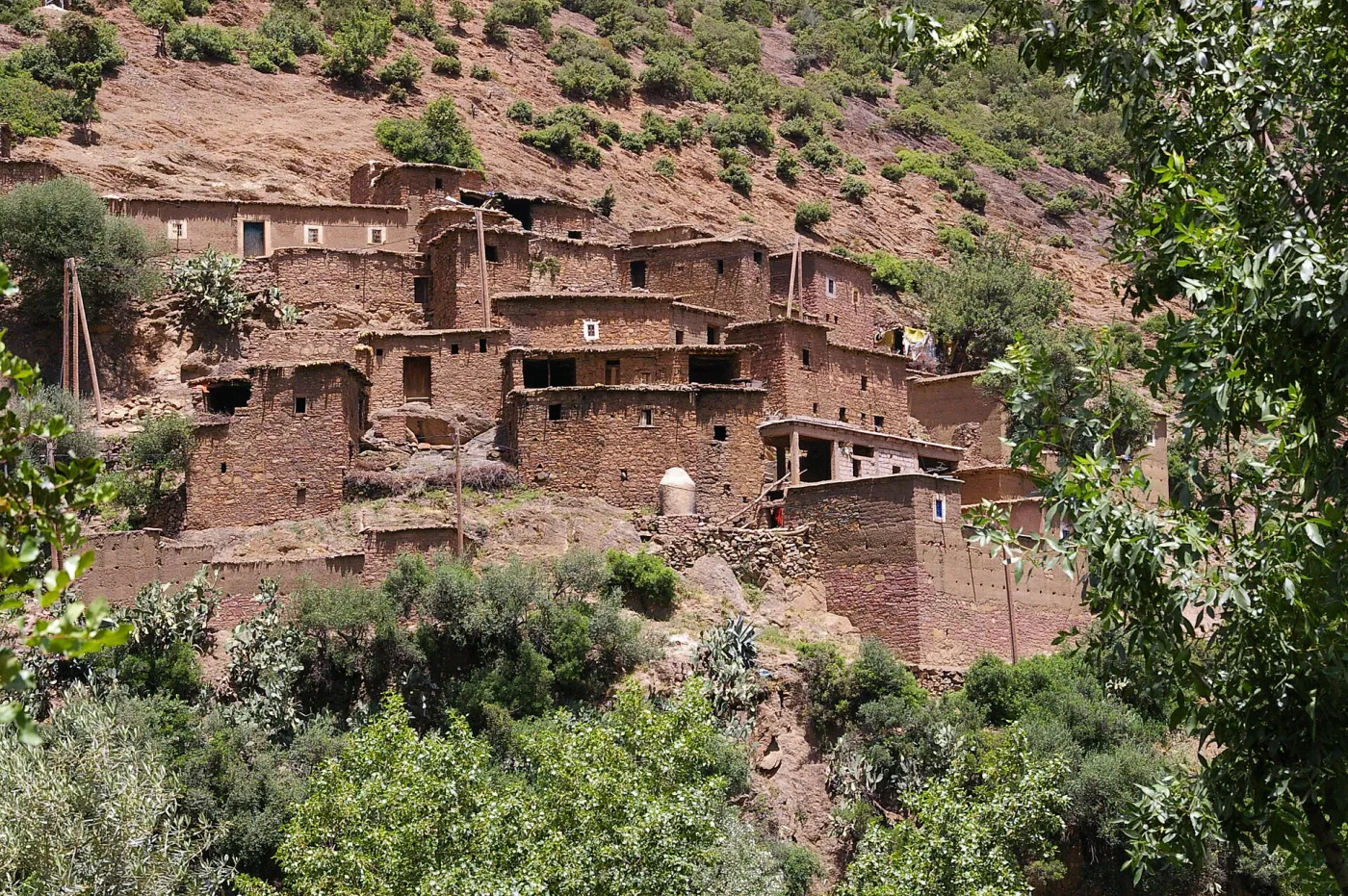
| 10:15 | Berber house, Ourika | Mint tea and bread with amlou; see a traditional mud-brick home |
| 11:00 | Setti Fatma | Walk to the first of the seven cascades, 45–90 min return |
| 13:00 | Riverside lunch | Tagine at a café with tables over the water (lunch not included, approx. 80–150 MAD) |
| 14:30 | Asni and Moulay Brahim gorge | Red rock gorge, views to Toubkal massif, village life |
| 15:30 | Ouirgane or Kik plateau | Short walk, olive groves, lake views, photo stops |
| 17:30 | Back in Marrakech | Drop-off at your accommodation |
The Ourika Valley: the busiest valley
Ourika sits about 60–65 km from Marrakech, roughly 1 h 15 min by road. It is the most visited valley, and on weekends Marrakchi families come up to eat by the river, so expect traffic from late morning. Setti Fatma, at the end of the road, is the base for the waterfall walk.
The Setti Fatma waterfalls walk
The first cascade is a 30–45 minute scramble over boulders each way; reaching the higher falls takes two to three hours return. Local guides at the trailhead will offer to lead you, usually for 50–100 MAD per group. It is not dangerous, but it is uneven, wet in spring and slippery on polished rock, so trainers with grip are much better than sandals.
Water levels through the year
The falls are fullest from March to May with snowmelt. In late summer (August–September) they can be a thin trickle. After heavy storms the river rises fast; in these conditions we skip the walk and spend more time in the villages.
Asni, Moulay Brahim and the road to Imlil
Asni is around 47 km from Marrakech on the Tizi n'Test road. On Saturdays its weekly souk is one of the most genuine rural markets near the city; we wrote a separate guide to the Asni Saturday market and how to visit it respectfully. On other days you drive through the Moulay Brahim gorge, a red sandstone canyon, and get the first clear views of the Toubkal massif (4,167 m, the highest peak in North Africa). Imlil, 17 km further up, is where Toubkal climbs start; some three valleys days add a short walk there instead of Ouirgane.
Ouirgane or the Kik plateau: the quiet third valley
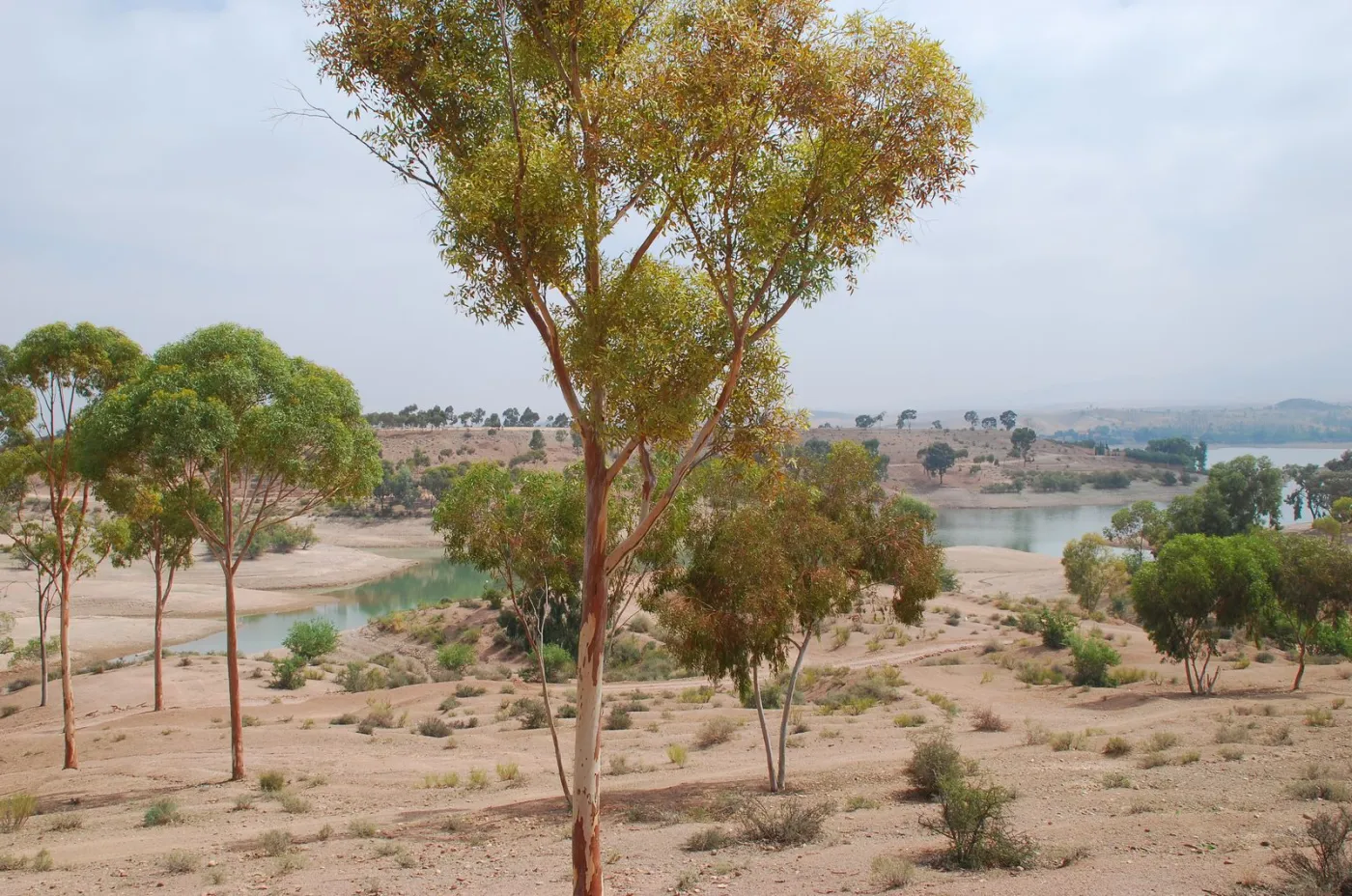
Ouirgane is a green valley of olive, almond and juniper trees about 60 km from Marrakech, with a small dam lake and a handful of guesthouses. It is calmer than Ourika and feels more like countryside than a tourist stop. The Kik plateau alternative, above Amizmiz, is open farming country with wide views down to Lalla Takerkoust lake and the snowy peaks behind. In spring the plateau is covered in wheat and wildflowers; in summer it is golden and dusty.
Best time of year for a three valleys trip
- March–May: our favourite. Green terraces, full waterfalls, almond and cherry blossom, 20–26 °C in the valleys.
- June–September: the valleys are 5–8 °C cooler than Marrakech, which is a real relief when the city hits 40 °C. Falls are lower.
- October–November: clear light, walnut and apple harvests, pleasant walking.
- December–February: snow on the peaks and crisp days, but cold in the shade and occasional road closures at altitude. Bring a warm layer.
What to bring and what it costs on the day
Beyond the tour price, budget for lunch (80–150 MAD), an optional waterfall guide (50–100 MAD per group), small change for the tea stop or a tip, and any purchases at cooperatives. Wear shoes with grip, carry a light jacket, sunscreen and a refillable bottle. Women do not need to cover their hair, but shoulders and knees covered is more comfortable in the villages. If you are unsure about tipping amounts, our colleagues' guide to tipping guides and drivers in Morocco sets out sensible ranges.
Three valleys or a single-valley day?
If your main wish is a proper walk, one valley (Ourika or Imlil) with more time on foot works better than three stops. The three valleys format suits people who want variety, a first look at mountain village life and plenty of viewpoints without a long hike. It is also a good match for families and mixed groups where not everyone wants to walk far. For other ideas in the same range, see our overview of day excursions from Marrakech.
Quick FAQ
How far are the three valleys from Marrakech?
The closest valley, Ourika, is about 1 h 15 min away; Asni is about 1 hour. The full loop covers roughly 180–220 km with around 4–5 hours of driving spread across the day.
Is the three valleys trip suitable for children or older travellers?
Yes. The drive and village stops are easy; the Setti Fatma waterfall walk is optional, and your guide can suggest a flat riverside stroll instead.
Is lunch included?
On our tour lunch is paid on the spot, so you can choose where and what you eat. Expect 80–150 MAD for a tagine and drink.
If the Atlas gets you hooked and you want a summit next time, read this complete guide to climbing Mount Toubkal.
Plan your day with us
We live here and drive these roads every week, so we are happy to adjust the route: more walking, a Saturday detour to Asni, or a slower pace with kids. Our three valleys Atlas day trip runs private or in small groups from €35 per person, with free pickup from your riad. Send us a message on WhatsApp or through the website with your dates; there is no online prepayment.
Comments