In this guide
The easiest Morocco SIM card option is to buy a tourist pack at the airport from Maroc Telecom, Orange or Inwi: expect roughly 50–200 MAD for 10–40 GB, with your passport required. An eSIM costs a little more (about €10–35) but works the moment you land. For money, withdraw dirhams from bank ATMs (typically 20–40 MAD fee per withdrawal) and carry cash, because cards are not accepted everywhere.
Buying a Morocco SIM card
Morocco has three mobile networks: Maroc Telecom (often called IAM), Orange and Inwi. All three sell prepaid SIMs with data packs and cover the cities and main roads well. In the High Atlas valleys and the desert, Maroc Telecom tends to have the widest coverage, though every network has gaps in deep gorges and among the dunes.
At the airport
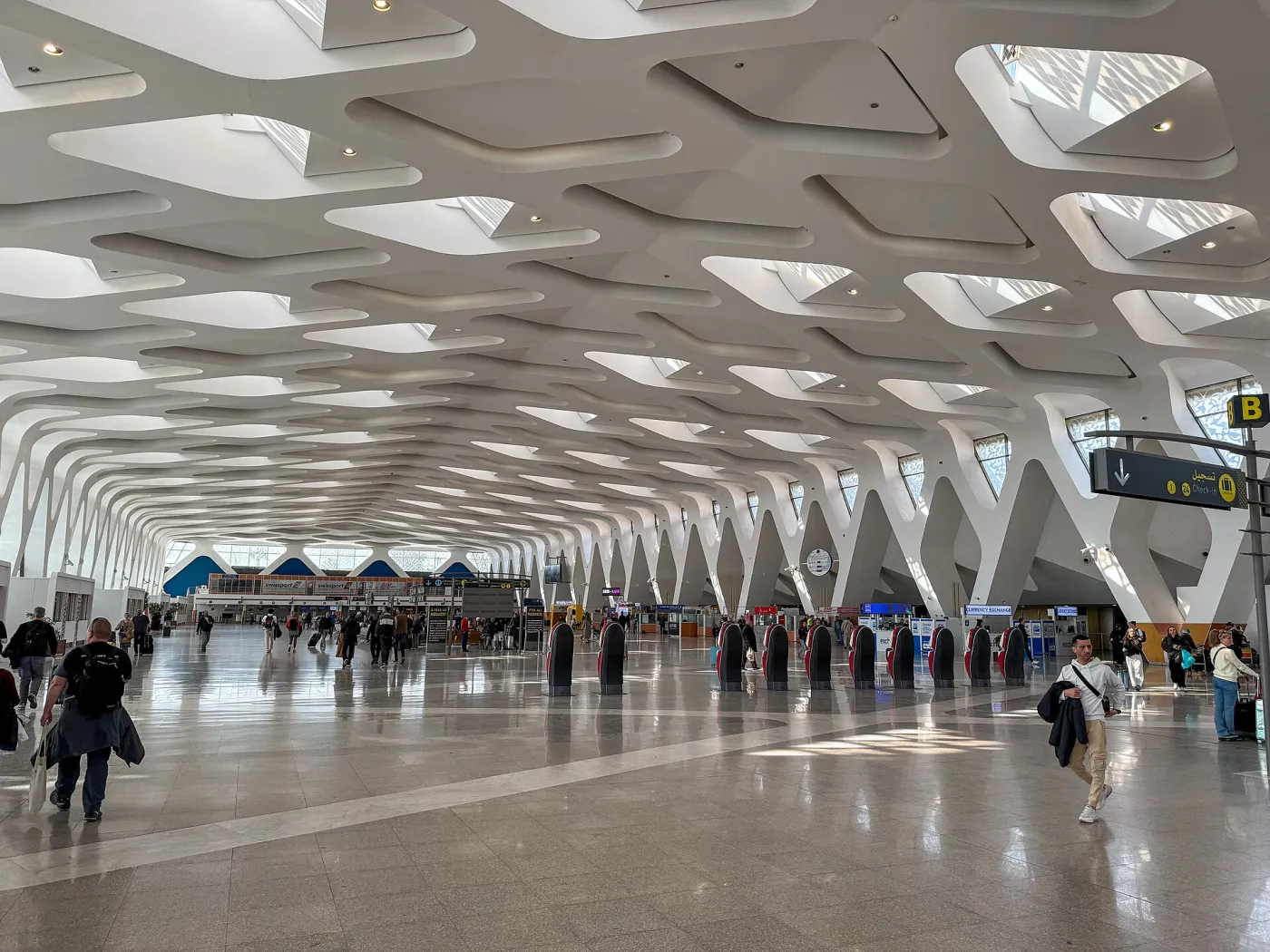
In Marrakech Menara, the three operators have official booths in the arrivals hall, after baggage reclaim. Prices are the same as in city shops. You will need your passport for registration; staff insert and activate the SIM for you, which takes about ten minutes. Some booths close late at night, so a very late arrival may mean buying in town the next day.
In town
Official shops in Gueliz and near the medina sell the same packs. Small corner shops sell SIMs and top-up cards too, but go to an official shop if you want it set up for you.
What does it cost?
| Option | Approximate price (2026) | Good for |
|---|---|---|
| Tourist SIM pack (airport or shop) | 50–200 MAD (about €5–19) for roughly 10–40 GB | Most travellers, especially for 1–3 weeks |
| Top-up (recharge) card | From 10–20 MAD up to 200 MAD | Adding more data later |
| International eSIM | About €10–35 for 5–20 GB | Landing late, or keeping your home SIM active |
| Home-network roaming | Often expensive; Morocco is outside EU roaming | Emergencies only |
Top-ups are sold in almost every corner shop (hanout) and newsagent. You scratch the card and dial the short code printed on it, then choose an internet pass; shop staff will usually do it for you in a minute.
eSIM or local SIM?
A local SIM gives you a Moroccan number, which helps if you want riads, drivers or restaurants to call you, and it is cheaper per gigabyte. An eSIM is ideal if your phone supports it and you want data the second you land, for example to message your driver from the runway. For a short trip, a decent eSIM data pack on its own is usually enough.
WhatsApp is how Morocco communicates, from riad receptions to tour companies, so make sure you have data or Wi-Fi before arranging meeting points.
Money: the Moroccan dirham
The dirham (MAD, written "dh" locally) is a closed currency: you can't really buy it before you travel, and only small amounts may be taken out of the country. In 2026, one euro is roughly 10.5–11 MAD, and one pound around 12–13 MAD. Prices you will see often: a mint tea 10–20 MAD, a tagine lunch 60–120 MAD, a petit taxi ride in town 15–40 MAD.
ATMs
- You will find ATMs at the airport, in Gueliz, around Jemaa el-Fna and in every town on the main routes. They are rarer in villages and near the dunes, so withdraw before you head out.
- Moroccan banks usually charge about 20–40 MAD per withdrawal on foreign cards, on top of your own bank's fees.
- Maximum withdrawals are typically 2,000–4,000 MAD per transaction.
- Use ATMs attached to a bank branch (Attijariwafa, Banque Populaire, Bank of Africa, CIH) and during opening hours if possible, so staff can help if a card is swallowed.
- If the machine offers to charge you in euros or pounds, decline and choose dirhams: that "conversion" usually costs more.
Exchanging cash
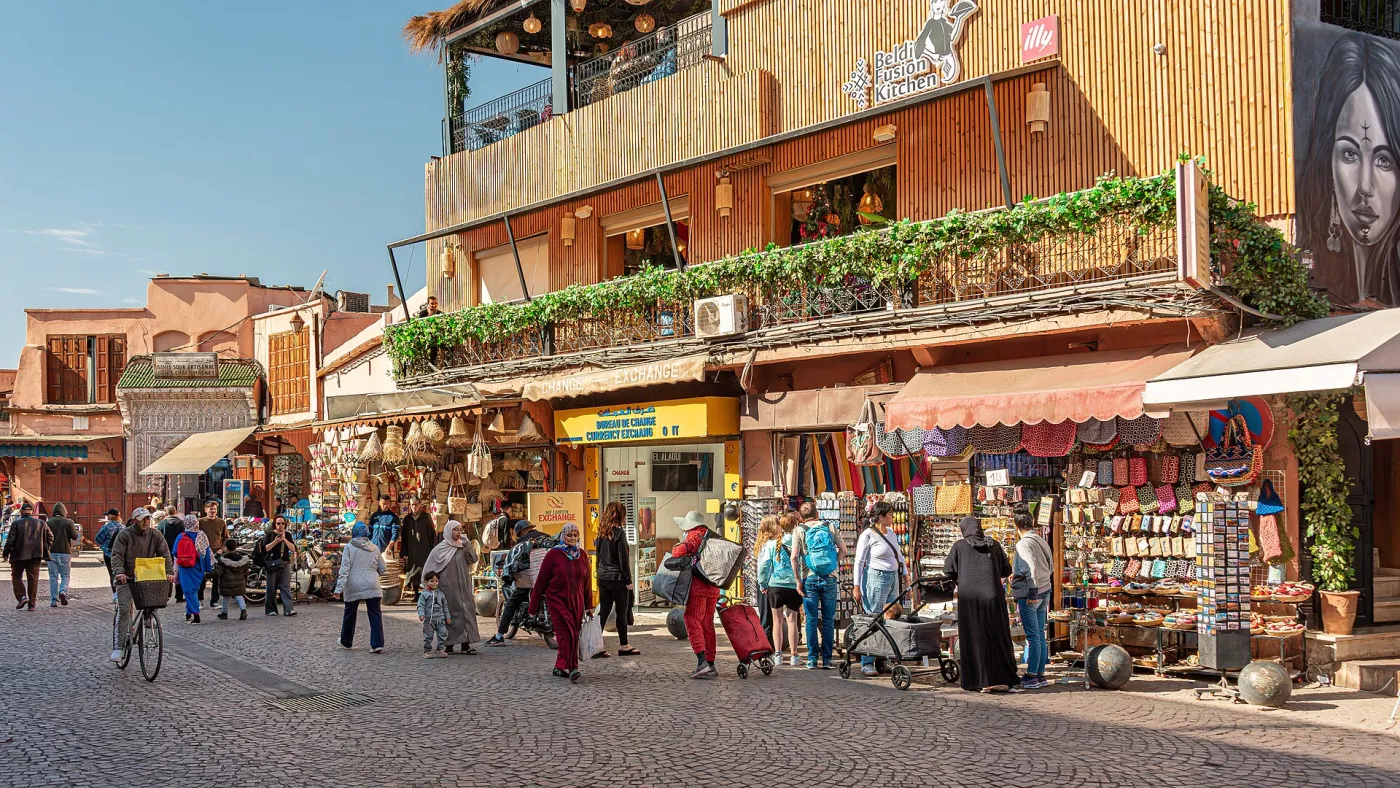
Licensed exchange offices (bureaux de change) are common in Marrakech and usually charge no commission; rates are close to the bank rate. Bring clean, undamaged euro, pound or dollar notes. Keep your receipts, as you need them to change leftover dirhams back at the airport. Never change money on the street.
Cards vs cash
Visa and Mastercard work in most hotels, larger riads, supermarkets, fuel stations and upscale restaurants. Cash is king for souks, street food, small cafés, taxis, entrance fees at smaller sites and tips. A comfortable daily amount is 500–1,000 MAD per couple outside hotel bills.
Arrival checklist
- Withdraw or exchange enough dirhams in the arrivals hall for your first two days.
- Buy a SIM or activate your eSIM before leaving the terminal.
- Break a large note on something small so you have change for porters and tips.
- Message your riad or driver on WhatsApp to confirm your pickup point.
For the next step, our guide on getting from Marrakech airport to the medina compares taxis, the bus and transfers. If you would like someone waiting for you, our private Marrakech airport transfer starts from €15 per person, paid locally.
Wondering how much to leave for guides and drivers? Our guide to tipping in Morocco lists typical amounts in dirhams.
Quick FAQ
Which is the best SIM card in Morocco for tourists?
All three are fine in cities. Maroc Telecom has the broadest rural coverage, which matters on Atlas and Sahara routes; Orange and Inwi often have slightly more data for the price.
Can I use my phone in Morocco without a local SIM?
Yes, on Wi-Fi in riads and cafés, or via roaming, but roaming charges from the UK and EU are usually high because Morocco is not in EU roaming zones.
Should I bring euros or get dirhams at an ATM?
Both work. Many travellers bring some euros or pounds for exchange as a backup and use ATMs for the rest.
Arrive ready, then let us take care of the rest
Once your phone and wallet are sorted, the fun starts. Tell us on WhatsApp (+212 606-957514) what you would like to see, and we will help you build a day trip or longer route; pickup from your hotel or riad in Marrakech is free. Browse all our private and tailor-made trips for inspiration.
Comments