In this guide
- What a camel trek in the Sahara actually is
- How it feels: the honest version
- What to wear
- What to pack for the ride
- Photos from the saddle
- Who can ride, and who should not
- Camel welfare: what we look for
- Camel ride vs other ways to reach camp
- Short on time? Try a camel before the Sahara
- Quick FAQ
- Ready for your first trek?
Our top camel trek tips: wear long, loose trousers and closed shoes, lean back as the camel stands up and forward as it kneels, and keep a small bag with water, a scarf and sunglasses. The ride from the edge of Erg Chebbi to most camps takes about 1 to 1.5 hours at walking pace, which is enough to enjoy it without real soreness.
What a camel trek in the Sahara actually is
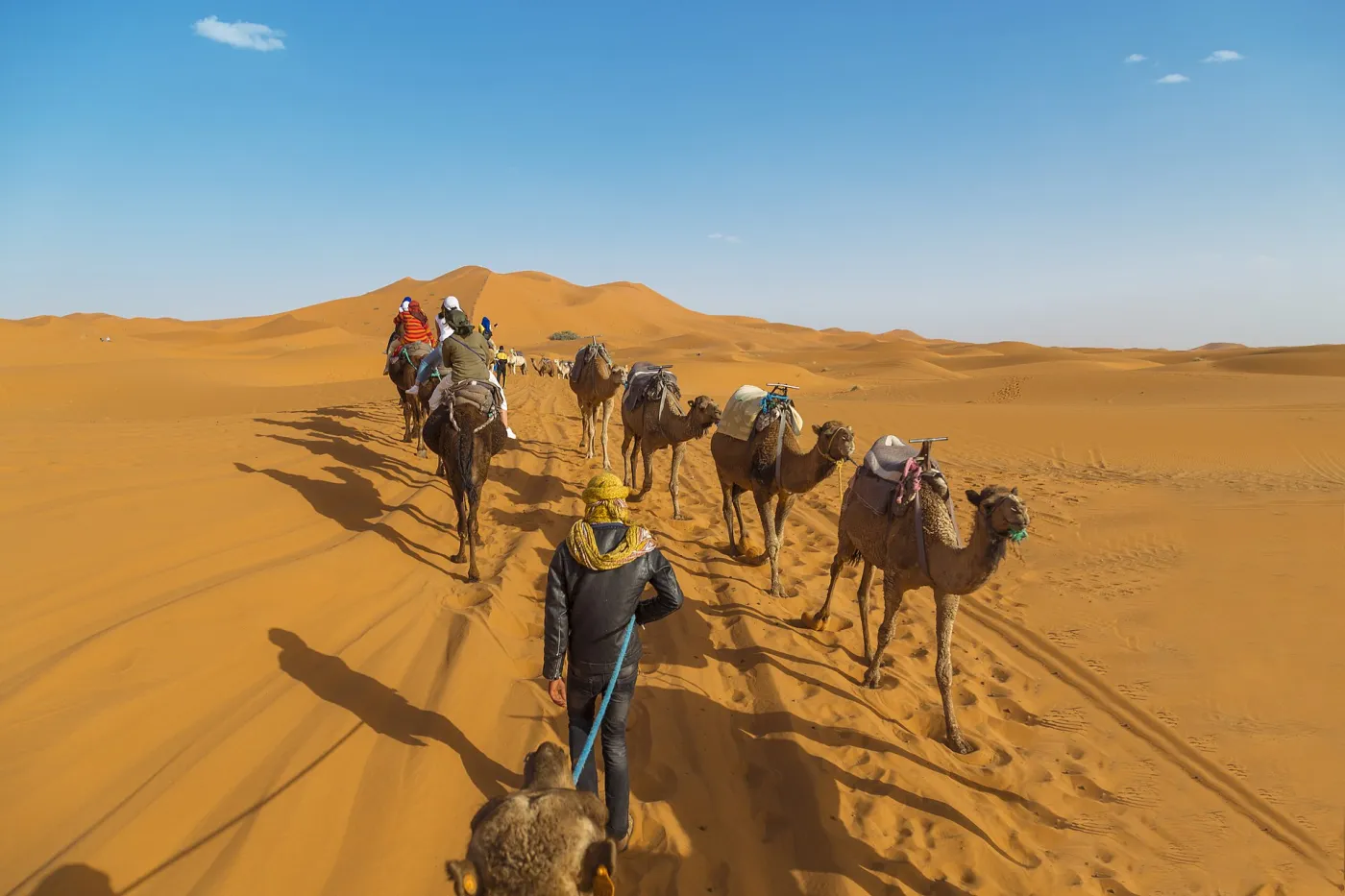
Most people picture a long expedition. In reality, on our desert tours the camel trek is the last stretch into camp: you leave the vehicle at the edge of the dunes near Merzouga in the late afternoon, ride in with a guide on foot leading the caravan, stop on a ridge for sunset, and reach your tents as the light fades. The next morning you ride back out, often after sunrise. Your guide walks the whole way, holding the lead rope, so you do not need to steer.
The animals are dromedaries (one hump). They are calm, used to people and move at walking speed, around 4 to 5 km per hour. Nobody gallops.
How it feels: the honest version
Getting on and standing up
This is the moment everyone laughs about. The camel is kneeling when you climb on. When it stands, it rises back legs first, tipping you forward sharply, then lifts the front. Hold the handle on the saddle with both hands, lean back and keep your feet in the stirrups if there are any. Getting off is the reverse: the camel drops to its front knees first, so lean back again. Your guide will say "hold on" before each move.
The rocking motion
Camels move both legs on one side at once, which gives a rolling, side-to-side sway. For the first ten minutes it feels odd; then most people relax into it. Going down steep dune faces feels steeper than it is. Sit tall, loosen your hips and let your body follow the movement instead of gripping.
Will you be sore?
After an hour, some people feel it in the inner thighs and lower back, similar to a first horse ride. On a 1–1.5 hour ride it is rarely more than that. If you are worried, you can walk part of the way beside your guide; the sand is soft and it is a lovely walk.
What to wear
- Long, loose trousers (not shorts) to avoid chafing against the saddle blanket.
- Closed shoes or trainers; sand in the afternoon can be hot enough to burn bare feet from May to September.
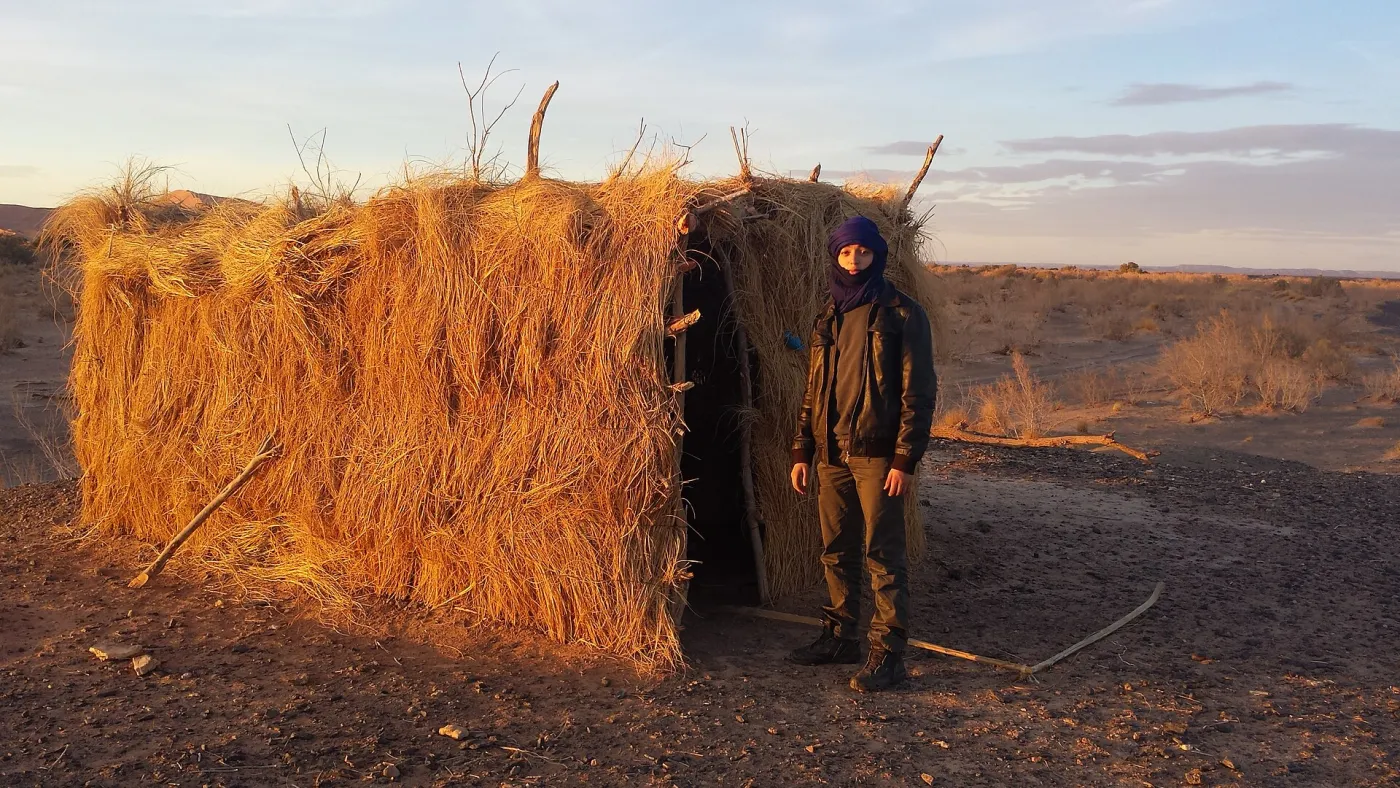
- A scarf or cheche (the local turban) against sun and wind. You can buy one in Merzouga or Rissani for around 50–100 MAD (€5–10); your guide will show you how to tie it.
- Sunglasses and a hat with a strap, because the wind lifts anything loose.
- A warm layer from October to April. Once the sun drops, the temperature can fall 15°C in an hour.
Long skirts are awkward on a camel; loose trousers are easier for everyone.
What to pack for the ride
Leave your main luggage in the vehicle; your driver keeps it safe and you only take a small overnight bag to camp. For the trek itself, a soft backpack with:
- 1 litre of water per person
- Sunscreen and lip balm
- Phone or camera on a wrist strap, in a zip bag against sand
- Head torch for the camp at night
- Toiletries, a change of clothes and any medication
Hard suitcases do not travel on camels. If you are staying one night in the dunes, a small daypack is enough.
Photos from the saddle
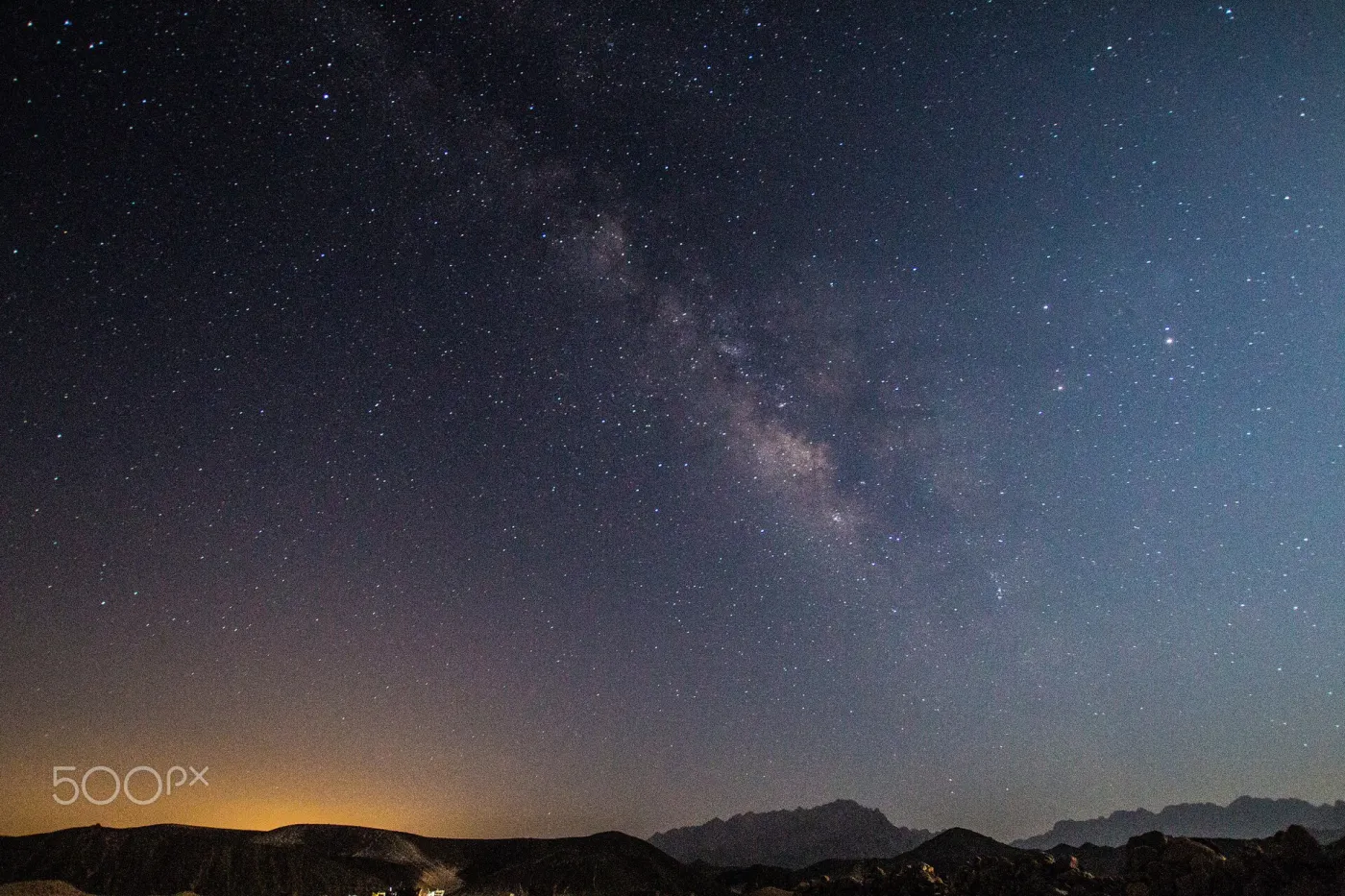
Hold your phone with a strap looped round your wrist: a phone dropped from two metres into soft sand is fine, one dropped down a dune face during the ride is a search party. The best shots are of the caravan's shadows at sunset, which stretch long across the ripples. Ask your guide to take a photo of you from the ground; they know the angles well. For the night that follows, have a look at our guide to stargazing and night photography in the Sahara.
Who can ride, and who should not
Children from about 4 or 5 usually ride with a parent or on their own camel in the caravan. Most adults are fine; there is a practical weight limit of around 110–120 kg for the animals' welfare, and riders with back or hip problems or who are pregnant should walk or use a 4x4 transfer to camp instead. Just tell us when you book and we will arrange it.
Camel welfare: what we look for
A good caravan has camels that are well fed, with clean saddles padded with blankets and no open sores. Ropes should be tied to a halter, not through the nose. Rides should be spaced with rest, and the animals rest in the heat of the day. If anything looks wrong to you, tell us; we choose camps partly on how they treat their animals.
Camel ride vs other ways to reach camp
| Option | Time to camp | Good for |
|---|---|---|
| Camel | About 1–1.5 hours | The classic sunset arrival |
| Walking beside the caravan | About 1 hour | Anyone who prefers to stretch their legs |
| 4x4 transfer | 15–30 minutes | Heavy bags, reduced mobility, late arrivals |
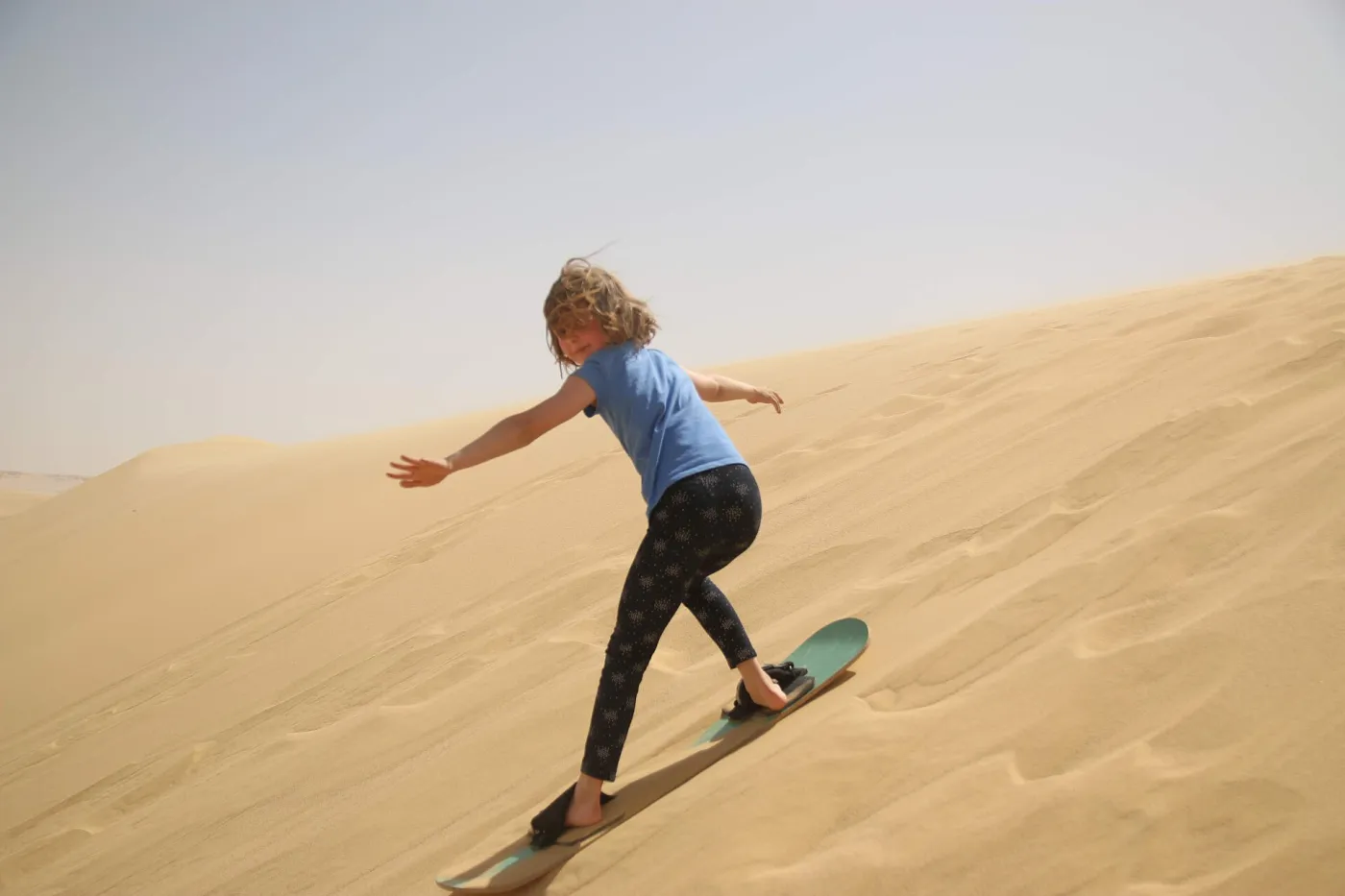
If you want more speed and less sway, 4x4 drives and sandboarding are a good addition the next morning. Our guide to sandboarding and dune drives around Merzouga explains how it works.
Short on time? Try a camel before the Sahara
If you are nervous about your first ride, a short evening ride near Marrakech is a good trial run. We compare the options in Camel Rides Near Marrakech: Palmeraie or Agafay? The Sahara trek is still the real thing: bigger dunes, silence and a camp at the end.
Quick FAQ
How long is the camel ride to a desert camp in Merzouga?
Usually 1 to 1.5 hours each way, including a sunset stop. Longer treks with a full day in the saddle can be arranged but are not for everyone.
Do I need any riding experience?
None. The guide leads the camel on foot, and you only need to hold on and follow the balance tips above.
Should I tip the camel guide?
It is appreciated but not required. Around 50–100 MAD (€5–10) per person for a good overnight trek is typical.
Still deciding what to bring? Our friends at Morocco Tours keep a detailed season-by-season Sahara packing list.
Ready for your first trek?
Our 3-day private Merzouga desert trip (from €165 per person) includes the camel trek into the Erg Chebbi dunes, a night in camp, free riad pickup in Marrakech and a licensed local driver. You can compare it with our other desert trips on the Sahara journeys page. Message us on WhatsApp with your dates and any questions; we reply personally, and you pay nothing online in advance.
Comments