In this guide
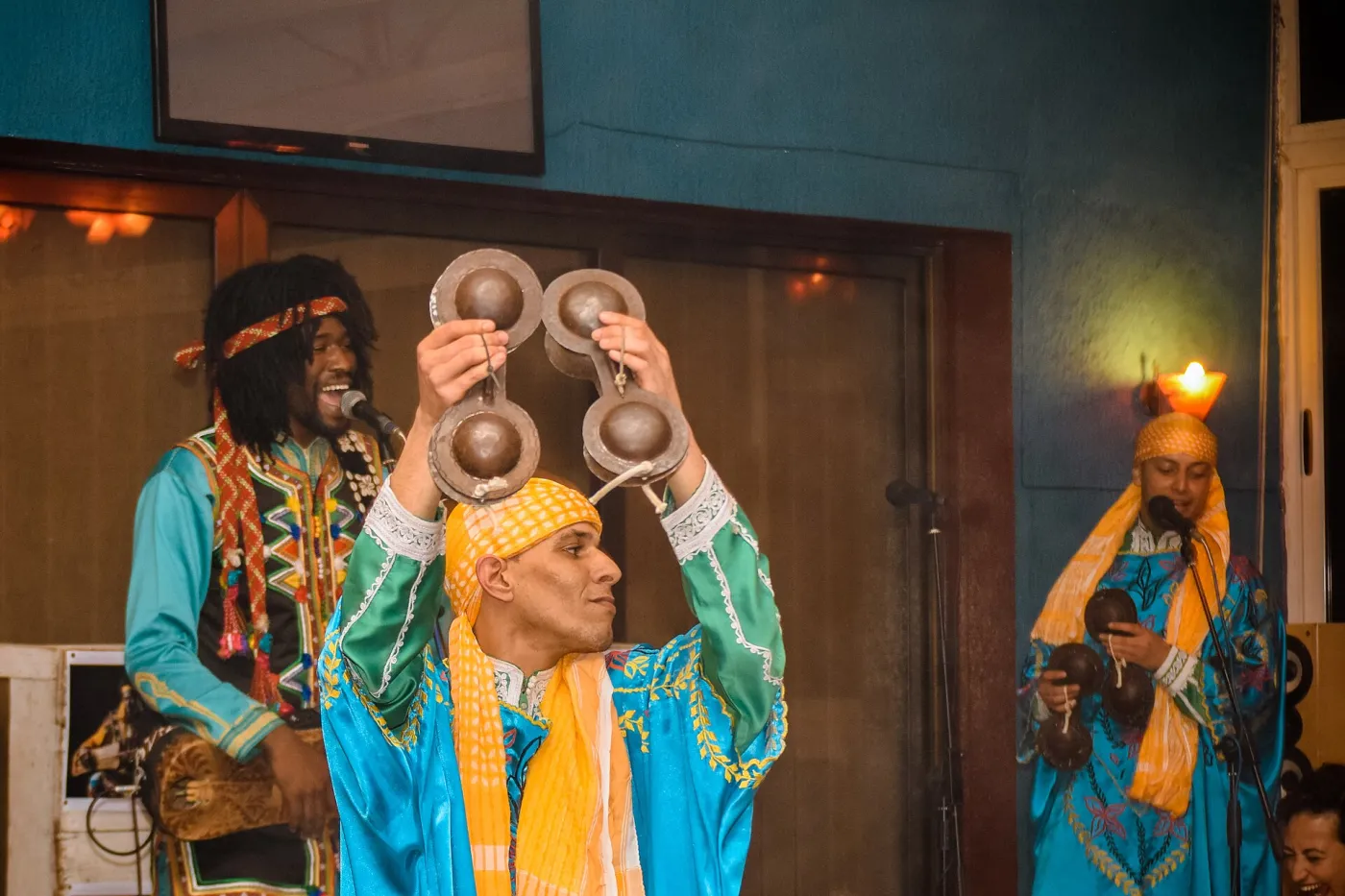
Khamlia is a small village about 7 km south of Merzouga where families of Gnawa heritage play their music for visitors. A typical visit lasts 30–45 minutes with mint tea and a live set on the guembri (a three-stringed bass lute) and qraqeb (iron castanets); there is no ticket, and guests usually leave a donation or buy a recording.
Where Khamlia is
Khamlia sits on the flat, stony plain along the paved road that runs south from Merzouga, with the dunes of Erg Chebbi rising just to the east. It takes 10–15 minutes by car from Merzouga, and most 4x4 excursions around the dunes stop here. A petit taxi from Merzouga costs roughly 50 MAD (€5) return with waiting time; many guests simply come with their driver on the way to or from camp.
The village itself is simple: mud-brick houses, a few guesthouses and a couple of music houses where groups receive guests. It is a quiet place, and part of its value is exactly that.
Who the people of Khamlia are
The families of Khamlia trace their roots to sub-Saharan West Africa. Their ancestors came north across the Sahara over many centuries, many of them enslaved, through the caravan routes that ran through the Tafilalet region and the old trading city of Sijilmassa near Rissani. Some local families use the name Bambara, after a people of present-day Mali, which tells you something about those origins. Over time, these communities became Muslim and Moroccan while keeping a musical and spiritual tradition that is distinctly their own: Gnawa.
If you are visiting Rissani too, our guide to Rissani's market and the ksar route explains the trading history that connects the two places.
What Gnawa music is
Gnawa is a repetitive, hypnotic music that mixes West African rhythms with Sufi devotional songs. Its most important context is the lila, an all-night spiritual ceremony meant to heal and bring blessing, in which each colour and rhythm is linked to a group of spirits. What you hear in Khamlia is a short, public version, not a ritual, but the rhythms and chants are the same family of songs. In 2019 Gnawa was added to UNESCO's list of the Intangible Cultural Heritage of Humanity.
The instruments
| Instrument | What it is | What you hear |
|---|---|---|
| Guembri (or sintir) | Three-stringed bass lute with a wooden body covered in camel skin | The deep, driving bass line, played by the maalem (master) |
| Qraqeb | Pairs of heavy iron castanets, one pair per hand | The metallic clatter that keeps the pulse |
| Tbel | Large double-headed drum played with sticks | Used in processions and bigger performances |
| Voices and handclaps | Call-and-response singing | The maalem leads, the group answers |
At some point you will usually be invited to join in with the qraqeb or to dance. It is fine to say no, but people who say yes usually end up laughing.
How Khamlia Gnawa music differs from what you hear in Marrakech
In Jemaa el-Fna you will hear Gnawa players in the evening crowd, competing with drums, snake charmers and food stalls. Khamlia Gnawa music is heard seated, a metre from the musicians, in a quiet room with the desert outside. The sets are slower to build, the bass of the guembri fills the space, and there is time to ask questions between songs. For many of our guests it is the moment on the whole trip they talk about most.
How a visit works
- You arrive at the music house and are welcomed into a simple room lined with cushions.
- Mint tea is served while the musicians tune up.
- They play for around 30–45 minutes, often explaining a little about each song through your guide.
- At the end, recordings and small handmade items may be offered; there is no obligation to buy.
- You leave a donation for the musicians.
Music is a key source of income for these families, so please give fairly. Around 50–150 MAD (€5–15) per person, or buying a CD or USB of their music, is a reasonable guide. Give it directly to the musicians or via your guide.
Best time to go
- Mornings are usually calmer; many 4x4 groups pass in the afternoon on their way to the dunes.
- October to April is the most comfortable season, since the rooms can be warm in summer.
- Ramadan may bring shorter or evening-only sessions; ask your driver the day before.
Respectful visiting
Ask before photographing people outside the music room; inside, a few photos and short videos during the performance are generally welcome, but put your phone down at some point and just listen. Dress modestly in the village, as you would anywhere in rural Morocco. Khamlia is a settled community rather than a nomadic one; for visiting herding families out on the plain, read our guide to meeting nomad families respectfully.
Combining Khamlia with other things to do
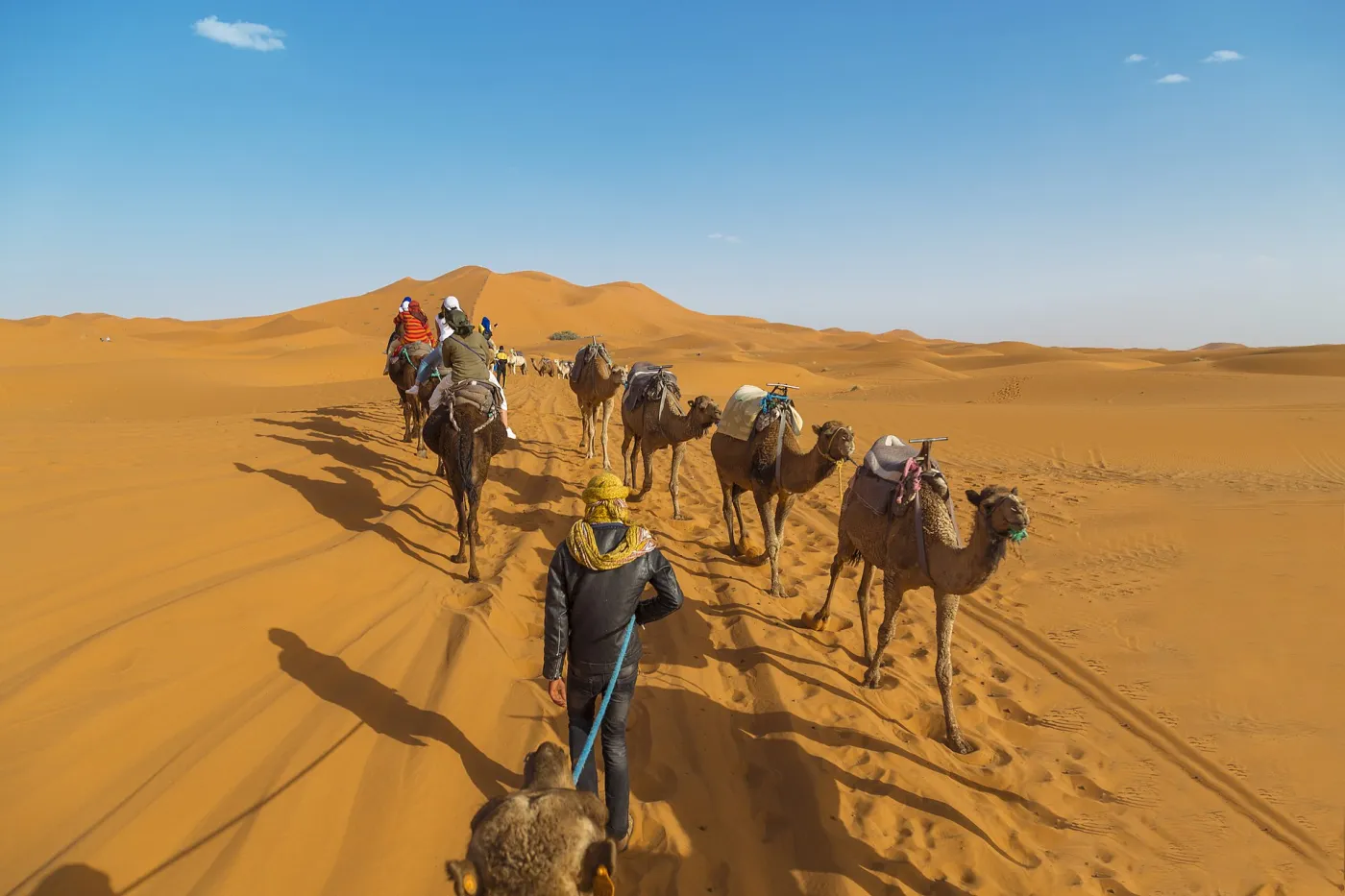
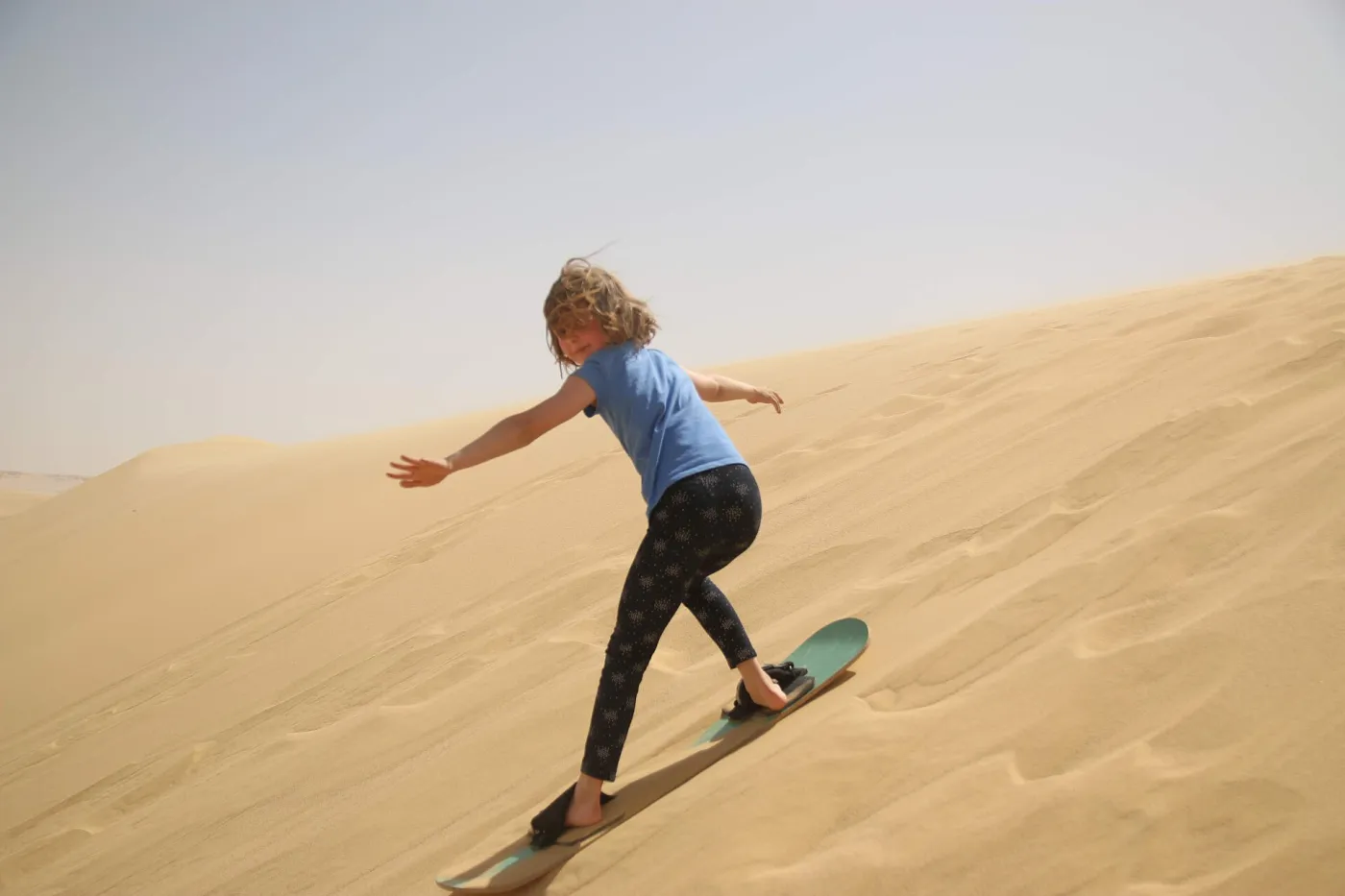
A classic half day around Merzouga looks like this: 4x4 drive along the dunes, a stop at a nomad tent, music in Khamlia, a look at the fossil and mining areas, then back to camp for the sunset camel ride. If you want some speed in that morning, our sandboarding and 4x4 guide explains the options and prices.
Quick FAQ
Do I need to book a visit to Khamlia?
No. Groups receive visitors through the day without reservations. If you come with us, your driver will simply take you there.
Can I stay overnight in Khamlia?
Yes, there are a few simple guesthouses in the village, and some evenings you may hear music informally. Most travellers stay in a desert camp or a Merzouga guesthouse instead.
Is Gnawa music only found in Khamlia?
No. Gnawa groups perform across Morocco, notably in Essaouira and Marrakech's Jemaa el-Fna square. Khamlia is special because you hear it in a small, desert setting close to where the music's story began.
Hear Gnawa music on your desert trip
A stop in Khamlia fits easily into our private Merzouga desert tour over 3 days (from €165 per person), which includes free riad pickup in Marrakech, a night in the Erg Chebbi dunes and a licensed local driver. See our other routes on the Sahara journeys page, then send us a WhatsApp message; we will reply ourselves, and there is no online prepayment.
Comments