In this guide
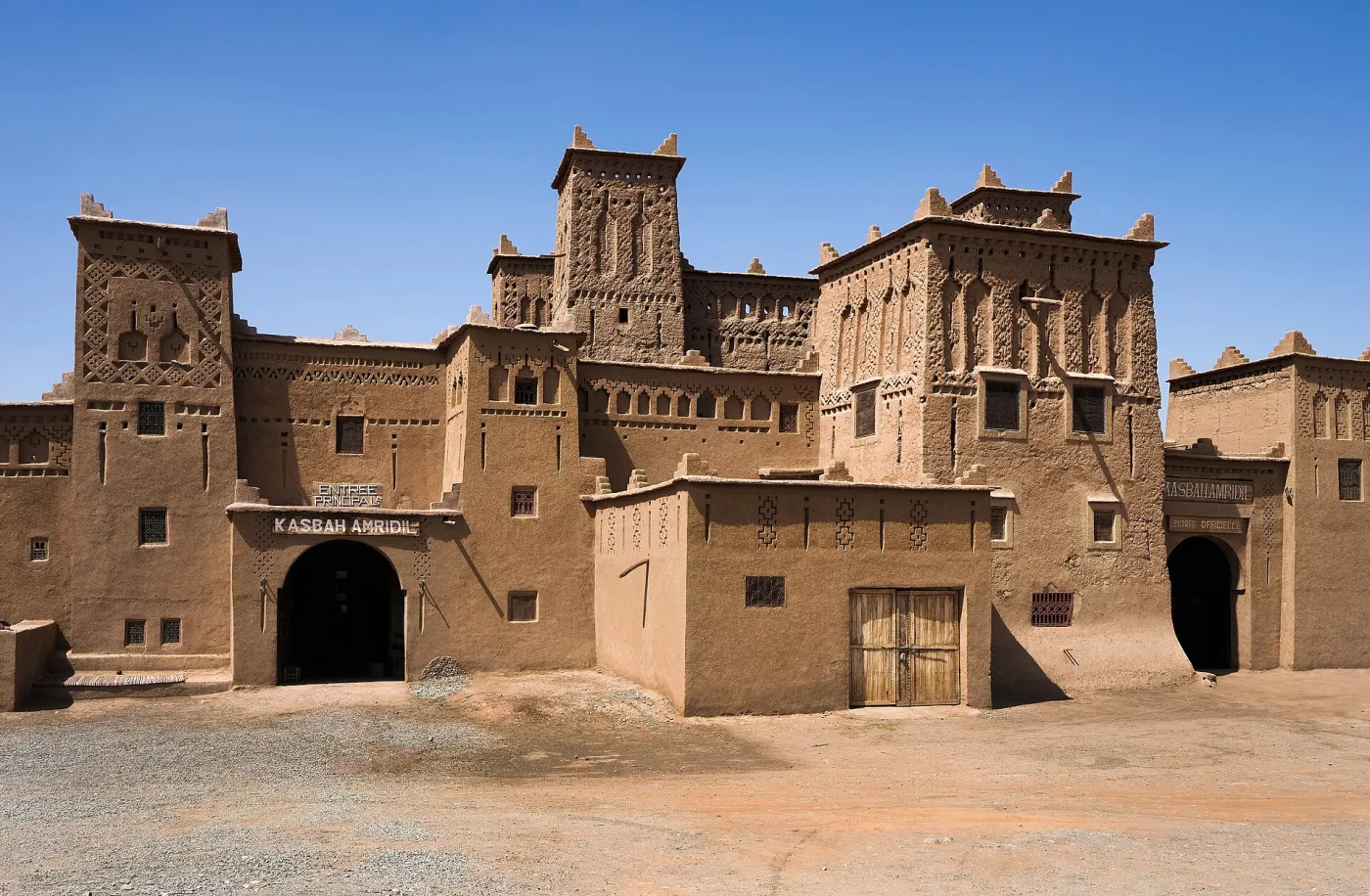
The Skoura oasis is a large palm grove about 40 km east of Ouarzazate on the road to the Dades Valley, and its best-known sight is Kasbah Amridil, a 17th-century earthen fortress once shown on the Moroccan 50-dirham note. Entry is roughly 20–30 MAD (€2–3), it is open daily from about 8 am to 6 pm, and a visit takes 45–90 minutes.
Where Skoura fits on the road to the Sahara
Driving east from Marrakech towards Merzouga, you cross the High Atlas by the Tizi n'Tichka pass, drop to Ouarzazate, then follow the N10 along what is often called the Road of a Thousand Kasbahs. Skoura is the first big oasis on that stretch, around 4.5–5 hours' drive from Marrakech. It sits between Ouarzazate (and its film studios) and El Kelaa M'Gouna in the Valley of Roses, then the Dades and Todra gorges.
Many drivers roll straight through. We think that is a mistake: a short stop here is one of the most rewarding breaks on the way to the desert, especially for people who like architecture and quiet walks.
Kasbah Amridil: what you see
Kasbah Amridil was built in the 17th century and has stayed in the same family, the Nasiri, for many generations; family members still live in part of it and look after the visit. It is a classic southern kasbah: a fortified family house with four corner towers, walls of pisé (rammed earth mixed with straw and gravel) up to about a metre thick, and upper walls decorated with geometric patterns cut and pressed into the earth.
Inside the kasbah
- Ground floor: stables, storerooms and an old olive press and grain mill.
- Kitchen and bread oven, with the smoke-blackened ceilings you will see in many kasbahs.
- Living rooms and a small mosque area, with painted wooden ceilings.
- A small museum of household objects: tools, locks and keys, pottery, jewellery and farming equipment.
- The roof terrace, with views over the palm grove and, on clear days, the High Atlas.
Look out for the exact angle shown on the old 50-dirham note, the photo everyone tries to recreate from the courtyard outside. A local guide from the family may show you around for a small tip on top of the ticket; it is worth it, because much of the kasbah's story is only passed on by word of mouth.
How the Skoura oasis works
An oasis is not just palms. Walk a few minutes into the grove and you see three layers of farming: tall date palms on top, fruit trees such as olive, fig, pomegranate and almond beneath them, and small fields of wheat, barley, alfalfa and vegetables on the ground. The palms protect the lower crops from sun and wind.
Water comes from the High Atlas via seasonal rivers and from khettaras, ancient underground channels that carry groundwater across long distances by gravity. Water rights are shared between families by time, sometimes measured in hours per week, and managed by local custom. Drought over recent years has made this system harder to maintain, and some kasbahs and fields have been abandoned as families moved to town.
Other things to see in Skoura
| Sight | Why stop | Time needed |
|---|---|---|
| Kasbah Amridil | Restored family kasbah, museum and roof terrace | 45–90 min |
| Palm grove walk | Shade, birdsong, irrigation channels and fields | 30–60 min |
| Kasbah Ait Ben Moro | 18th-century kasbah near the main road, now a guesthouse | 15–30 min |
| Dar Ait Sidi El Mati and other ruined kasbahs | Photogenic, partly collapsed towers inside the grove | 20–40 min |
| Weekly souk | Local produce market; ask your driver which day it falls | 30–45 min |
Ruined kasbahs can be unstable; admire them from outside and do not climb on the walls.
A simple walk through the palm grove
From Kasbah Amridil, follow the earth paths between the irrigation channels for 20–30 minutes. You pass walled gardens, small mud-brick houses, farmers cutting alfalfa for their animals and, in the late afternoon, children heading home from school. The paths wind and there are few signs, so either go with the family guide from the kasbah or stay within sight of the towers. Wear closed shoes, as the channels can be muddy after irrigation, and greet people you pass with a simple "salam". It is the quietest hour many of our guests spend on the whole route.
When to visit
Skoura is pleasant most of the year because the palms keep the grove cooler than the open road. Spring (March to May) brings green fields and almond and fruit blossom; autumn (September to November) is date harvest season. In summer, visit in the morning; midday temperatures can reach the high 30s °C. In winter it is sunny and mild by day but cold at night, which matters if you continue to the dunes; our Sahara in winter guide covers what to pack.
Combining Skoura with the rest of the route
Skoura pairs well with a morning at the Atlas Film Studios in Ouarzazate, 40 minutes west. Further east, Rissani and its market are the last big stop before the Merzouga dunes, and it is interesting to compare the family kasbahs of Skoura with the fortified villages there; see our Rissani and ksar route guide.
Quick FAQ
Is Kasbah Amridil worth the stop?
Yes, if you have an hour. It is one of the few kasbahs in the region that is both restored and still connected to the family that built it, so it feels lived-in rather than staged.
Can I stay overnight in the Skoura oasis?
Yes. Skoura has some of the most peaceful guesthouses in the south, many inside restored kasbahs within the palm grove. It is a good alternative to staying in Ouarzazate.
Can I pay by card at Kasbah Amridil?
Plan on cash. Bring small dirham notes for the ticket and any tip.
Stop in Skoura on our desert loop
Our 4-day Sahara and kasbahs loop (from €260 per person) follows the Road of a Thousand Kasbahs towards Merzouga, and with a private driver you decide how long to spend in places like Skoura. Free pickup from your Marrakech riad is included. Browse our Sahara journeys and send us your dates on WhatsApp; no online prepayment is needed.

Comments