In this guide
Meeting a nomad family in the Moroccan Sahara usually means a short visit to a tent on the desert plain near Zagora or Merzouga, arranged through your local guide, with tea and simple conversation. Ask before taking photos, accept the tea, bring practical food gifts such as sugar, tea or fruit rather than money or sweets for children, and keep the visit to around 30–60 minutes.
Who are the nomads of the Moroccan Sahara today?
The families you may meet are Amazigh (Berber) herders, many belonging to tribal groups such as the Ait Atta and Ait Khebbach, who have moved livestock across the pre-Saharan plains for centuries. Today most are semi-nomadic: they move goats, sheep and some camels between grazing areas with the seasons, and often have relatives, and a house, in a nearby village where children attend school. Years of drought have pushed many families to settle, so the number living fully in tents is smaller than it was a generation ago.
When people ask us about nomads Morocco Sahara trips, we are honest: these are working families, not a show. A good visit feels like being welcomed as a guest, briefly, into someone's everyday life.
The nomad tent (khaima)
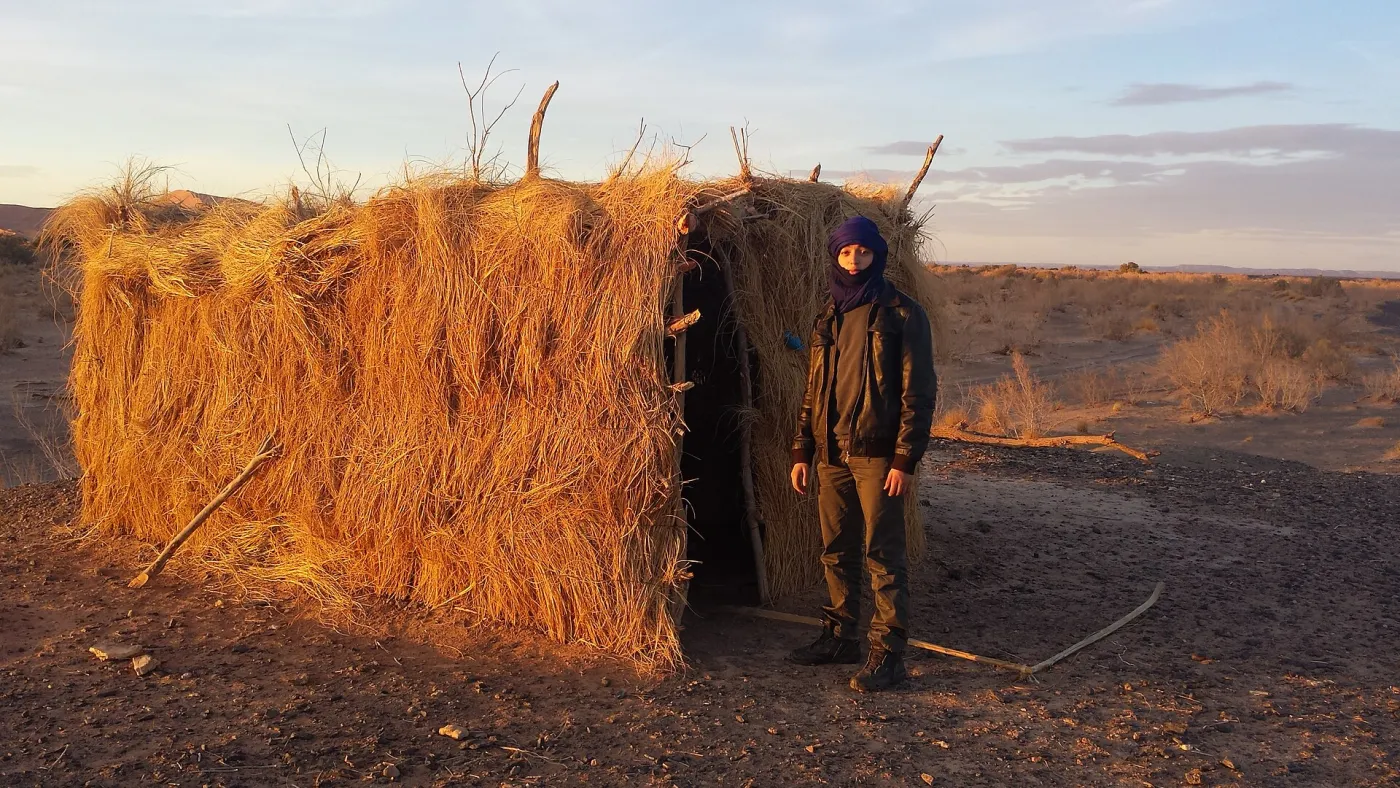
The traditional tent is woven by the women from goat and camel hair in long dark strips, stitched together and held up by wooden poles. It sheds rain, gives shade and lets air through in summer. Inside you will usually find woven rugs, blankets, a few cooking pots, a gas bottle or small fire for tea, and water containers. Many families now add a solar panel to charge phones. Livestock pens of stones or thorn branches sit a little way off.
How a visit usually works
- Your guide, who often knows the family or the area, checks that a visit is welcome that day. Nothing is guaranteed; families move and may be busy.
- You are greeted outside the tent and invited to sit on rugs, shoes off.
- Tea is prepared and poured from a height to make foam, often with bread, dates or amlou (almond and argan spread).
- Your guide translates. People are often curious about where you come from and your family.
- After 30–60 minutes you thank your hosts and leave your gift or contribution discreetly through the guide.
Etiquette: the essentials
Photos
Always ask first, through your guide, and accept a "no" without pushing. Women in particular may prefer not to be photographed. Photographing children without their parents' clear agreement is not okay. A good approach is to put the camera away for the first part of the visit and ask later, once you have shared tea.
Dress
Cover shoulders and knees. Loose, long clothing is also the most comfortable choice in the desert. For more on the cold side of the desert, read our guide to the Sahara in winter.
Tea and food
Accepting tea is part of the welcome; it is fine to drink one or two glasses and politely decline more. Eat and pass things with your right hand. If you have dietary restrictions, just say so through your guide; nobody will be offended.
Gifts and money
Useful gifts are the kind a household actually uses:
- A cone or box of sugar and green tea
- Fresh fruit or vegetables from the market
- Flour, dates or cooking oil
- For families with young children, school notebooks given to the parents
Please avoid handing sweets, pens or coins directly to children, which encourages begging along tourist routes. A contribution of around 50–100 MAD (€5–10) per group, handed to the adults via your guide, is appropriate if you have not brought food. For wider advice, our tipping in Morocco guide covers amounts across the trip.
Simple phrases that help
| Phrase | Meaning |
|---|---|
| Salam alaikum | Peace be upon you (hello) |
| Azul | Hello, in Tamazight |
| Shukran / Tanmirt | Thank you (Arabic / Tamazight) |
| Bslama | Goodbye |
| Safi, baraka | That's enough, thank you (useful for the third glass of tea) |
Zagora or Merzouga for meeting nomads?
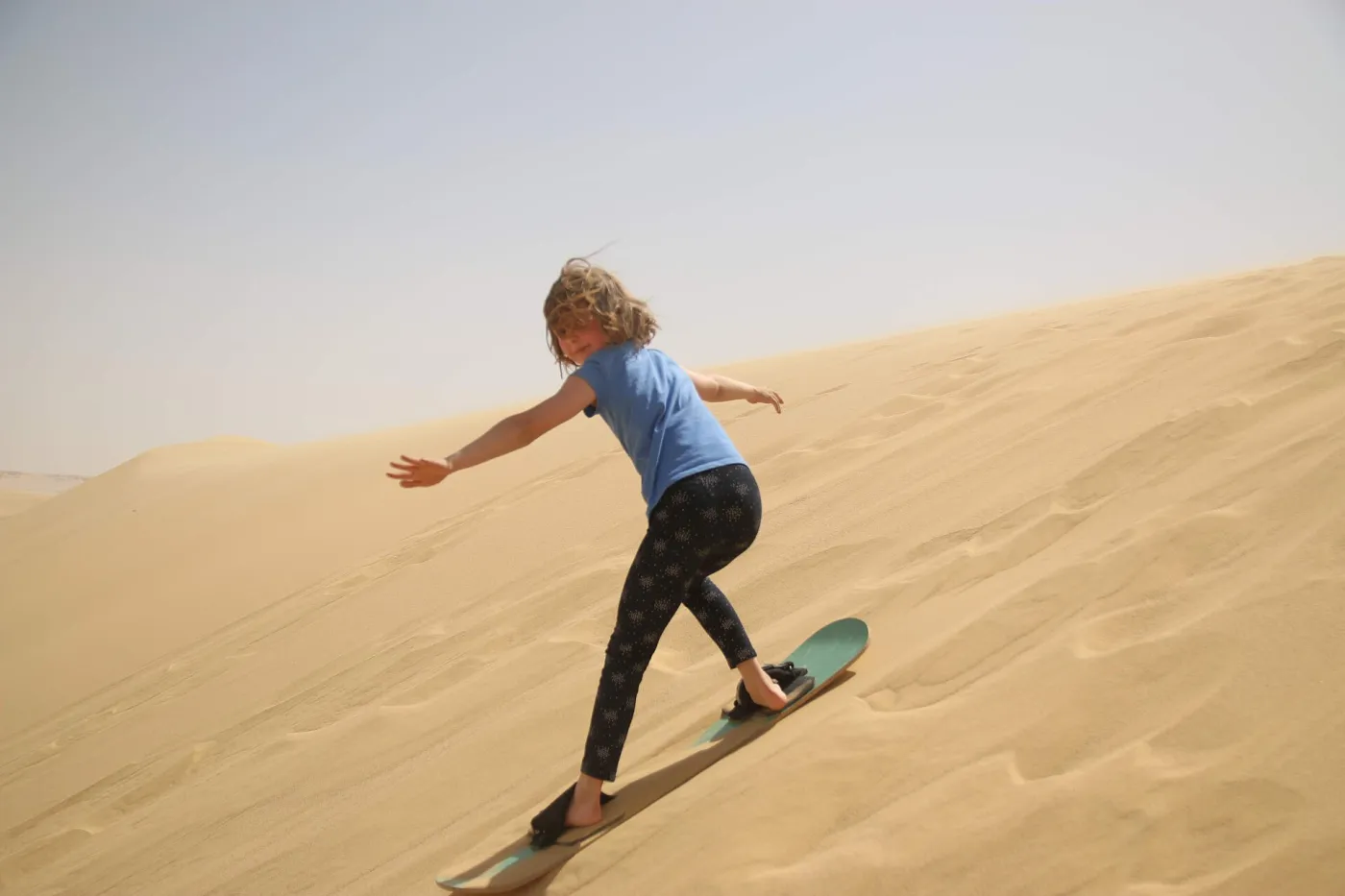
Both areas have nomadic and semi-nomadic families. Around Zagora, families graze animals on the stony plains and palm fringes of the Draa Valley; the drive from Marrakech crosses the High Atlas via the Tizi n'Tichka pass (2,260 m) and takes around 7 hours with stops, which is why it works as an overnight trip. Around Merzouga, families camp on the hamada near Erg Chebbi, and a visit is often combined with a 4x4 drive; see our sandboarding and dune drive guide. The Gnawa community of Khamlia near Merzouga is a different story again, settled rather than nomadic; we explain it in our Khamlia village guide.
Life on the plain through the year
Daily routines follow the animals and the weather. In spring, when rain has brought some grazing, families spread out across the hamada; in the heat of summer many move closer to wells or to relatives in the villages; in autumn and winter they may return to favourite camping spots. Water is fetched from wells, sometimes by donkey or small truck, and bread is baked daily. Knowing this helps you understand why a family you read about online may simply not be there when you visit.
What to avoid
- Arriving unannounced at a tent on your own, or with a driver who does not know the family.
- "Nomad experiences" staged next to the road, where the same family poses for every bus.
- Walking into livestock pens or touching animals without asking.
- Flying drones over tents.
- Promising to send photos or return if you will not.
Quick FAQ
Can I stay overnight with a nomad family?
Occasionally, if a family agrees, a simple stay can be arranged, but it is basic: rugs, blankets, no bathroom. Most travellers prefer a daytime visit and a night in a desert camp.
Do nomad families speak English or French?
Rarely. They speak Tamazight and often Darija (Moroccan Arabic). Your guide translates, which is one reason we always visit with a local guide.
Is a visit included in every desert tour?
It depends on where families are camped that season. We never guarantee it, but we ask for it on your behalf whenever a family nearby is happy to receive visitors.
Travel to the desert with local guides
Our Zagora overnight desert trip (from €90 per person) crosses the Atlas, follows the Draa Valley and ends with a night in the dunes, with free pickup from your Marrakech riad and licensed local guides who can arrange a respectful family visit when possible. Longer options are on our Sahara journeys page. Message us on WhatsApp; there is nothing to prepay online.
Comments